
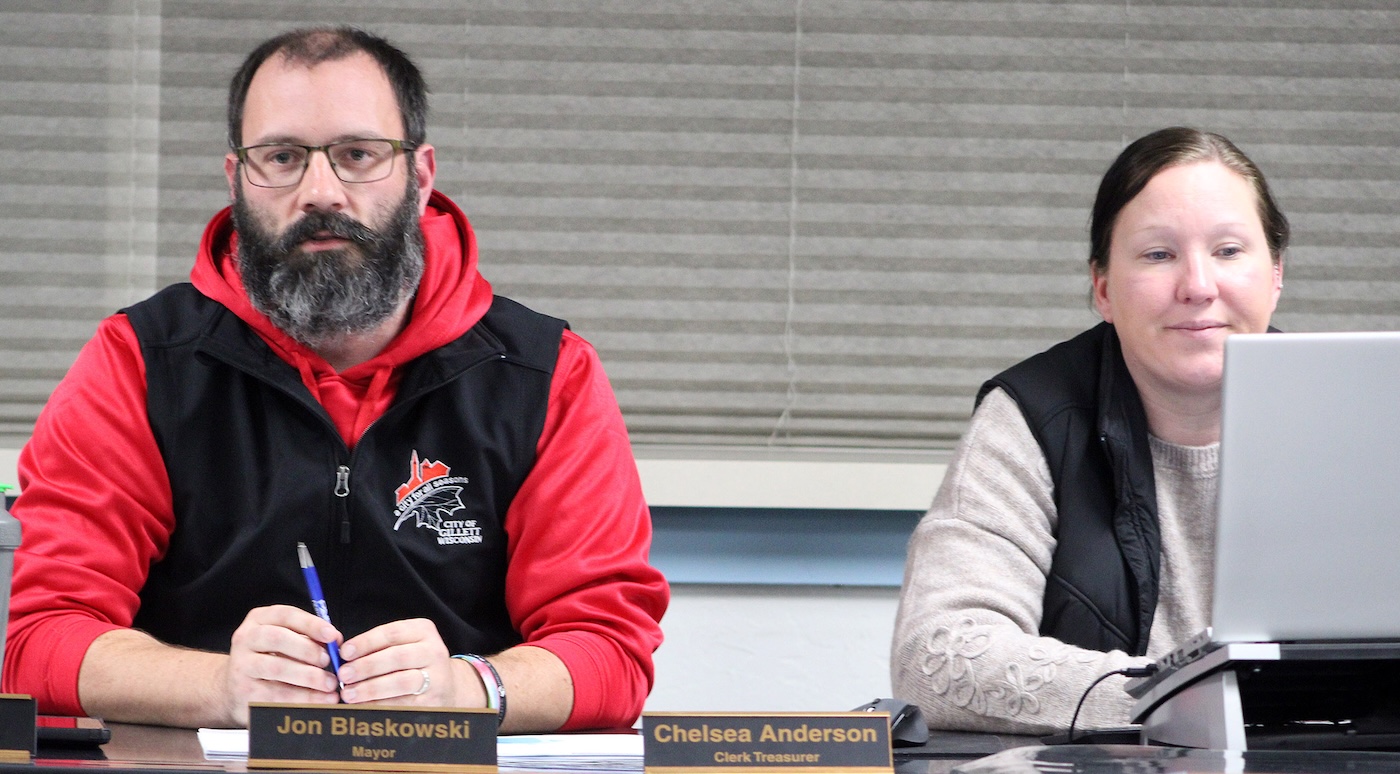
Members of the Gillett Common Council almost had to plug their noses Nov. 5 as they reluctantly approved a 10% increase in residential sewer rates.
Residential sewer meter costs will go up $2.80 per month. This comes on the heels of a 40% increase in the city’s water rates Oct. 1.
City Clerk Chelsea Anderson told the city’s utility committee earlier in the evening that all of the city’s loans are through the U.S. Department of Agriculture, and that agency is requiring that Gillett either increase its revenue by 30% by the end of 2027 or cut its expenses by that amount.
“We can do that by either cutting expenses or by raising rates,” Anderson said, noting that she provided the council numbers for 30% and 50% increases, as well.
Utility operator Matt Wickman said he would like to sell two vehicles used for city operations and replace them with one that could do the work of both jobs. However, that would not be enough of a financial balance, he said.
Several members of the council felt conflicted about raising sewer rates while noting that over $3 million in loans could put the city in a financial pinch. Mayor Jon Blaskowski was one of them.
“It really bothers me to keep raising rates,” he said. “We’ve already raised our water bills. We can’t keep doing this to the community.”
Blaskowski noted that the city is in a tight spot financially. He doesn’t think a rate increase will benefit residents, but neither will having to repay $3 million in loans right away if Gillett doesn’t comply with USDA’s requirements.
“I understand the reason for having to raise,” Blaskowski said. “I understand the consequences. We can’t have USDA cancel the loan, and we’re on the hook for $3 million, because that’s going to cost our taxpayers even more. We’re going to have to do something to show the USDA we’re working at it. Hopefully with the cuts that Matt is making, that will work out. Unfortunately, I don’t see how we don’t do something.”
Alderwoman Nanette Mohr questioned whether action needed to be taken right away.
“I don’t want to mess with them,” Mohr said. “I just don’t want to get into trouble because, once you’re red-flagged, it takes a long time to get rid of that red flag.”
Anderson noted that the USDA audits the city quarterly, so additional action will be needed in the next year to remain in compliance with the loan requirements. She noted the revenue changes needed to be done before the loans were received in September.
“We won’t know how much we need to cut until we do a quarter worth of looking at it,” Anderson said. “It was their (USDA’s) idea to cut expenses.”
She noted that the city had $717,000 in revenue from the sewer utility, and it has to generate another $215,100 to be in compliance unless expenses can be drastically cut. Anderson added the sewer rates haven’t been raised in 10 years.
Alderman Matt Young said this was a really bad time for Gillett to raise rates.
“The cost of living is really high, and that’s really affected our revenue,” Young said.
lpulaski@newmedia-wi.com


