
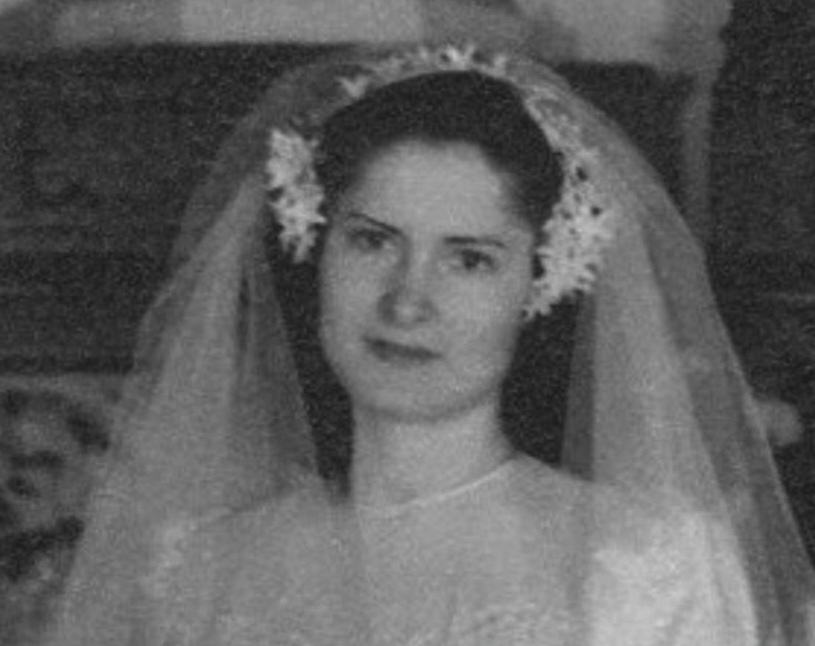
Marie (Mānīh) Warrington Floring began her journey to the spirit world Nov. 22. The revered Menominee Tribe of Wisconsin elder was 100.
Joey Awonohopay, tribal chairman, described her as “one of our most cherished language warriors and longtime champions of Omāēqnomenēweqnaesen.”
“It is impossible to measure the impact Mānīh had on so many of us,” he said in a statement from his office. “Her support of family and friends, her longstanding work on the Menominee Language Culture Commission, her unwavering support and advocacy for our language, and the blessing and knowledge she shared through Menominee namings will be greatly missed.”
Floring was born Oct. 19, 1926, on the Menominee Indian Reservation, the daughter of Margaret Warrington and William Franklyn. She was raised by her grandparents, Joe Pecore and Rachel Warrington Pecore.
Before she learned English, she was taught the original Menominee Indian language; her grandmother only spoke Menominee.
She was one of the last first language speakers.
In the early 1990s, Floring was taken under the wing of longtime friend and companion, Lavina Shawano, which led to her interest and involvement in the Menominee Language & Culture Commission, the tribal chairman said.
“While on the Commission, she became integral in strengthening and advancing our Menominee language programs and training,” Awonohopay said. “Her contributions helped shape the direction of that work and touched the lives of many tribal members. Her devotion to the tribe and dedication to our people were evident in the care she brought to every decision and issue.”
College of Menominee Nation President Chris Caldwell extended his condolences and sympathy to the Floring family.
“We appreciate her life of work for the Menominee people and language,” he said. “CMN, chartered by the Menominee people, has a similar purpose to promote, protect and advance the language and the culture in pursuit of our mission. We will draw inspiration from the example set by Mānīh and her generation as we continue our generations responsibilities.”
Floring graduated from Haskell Indian School in Kansas in 1945. She went to work for a doctor in Illinois and at Western Electric where she met her husband, Donald Floring. He preceded her in death in 1980.
In 1972, they moved back to the Menominee reservation.
“We are forever grateful to Mānīh for her generosity and commitment to our Menominee people,” said Jennifer Gauthier, director of the CMN Sustainable Development Institute. “Her devotion to language, culture and learning is an example to follow, and our Menominee language is thriving because of her.”
A funeral service will be held at 11 a.m. Dec. 2 at St. Michael’s Catholic Church in Keshena. Visitation will begin at the church at 9 a.m. and continue until the time of the service. Burial will be held at the St. Joseph of the Lake Cemetery.
“While we will always remember her contributions, we will also remember Mānīh for the laughter she shared, the friendships she built and the way she made each of us feel,” Awonohopay said. “She was our friend, our elder and our grandmother. We are deeply grateful for all she gave to our people, and we will carry her memory with us.”


