
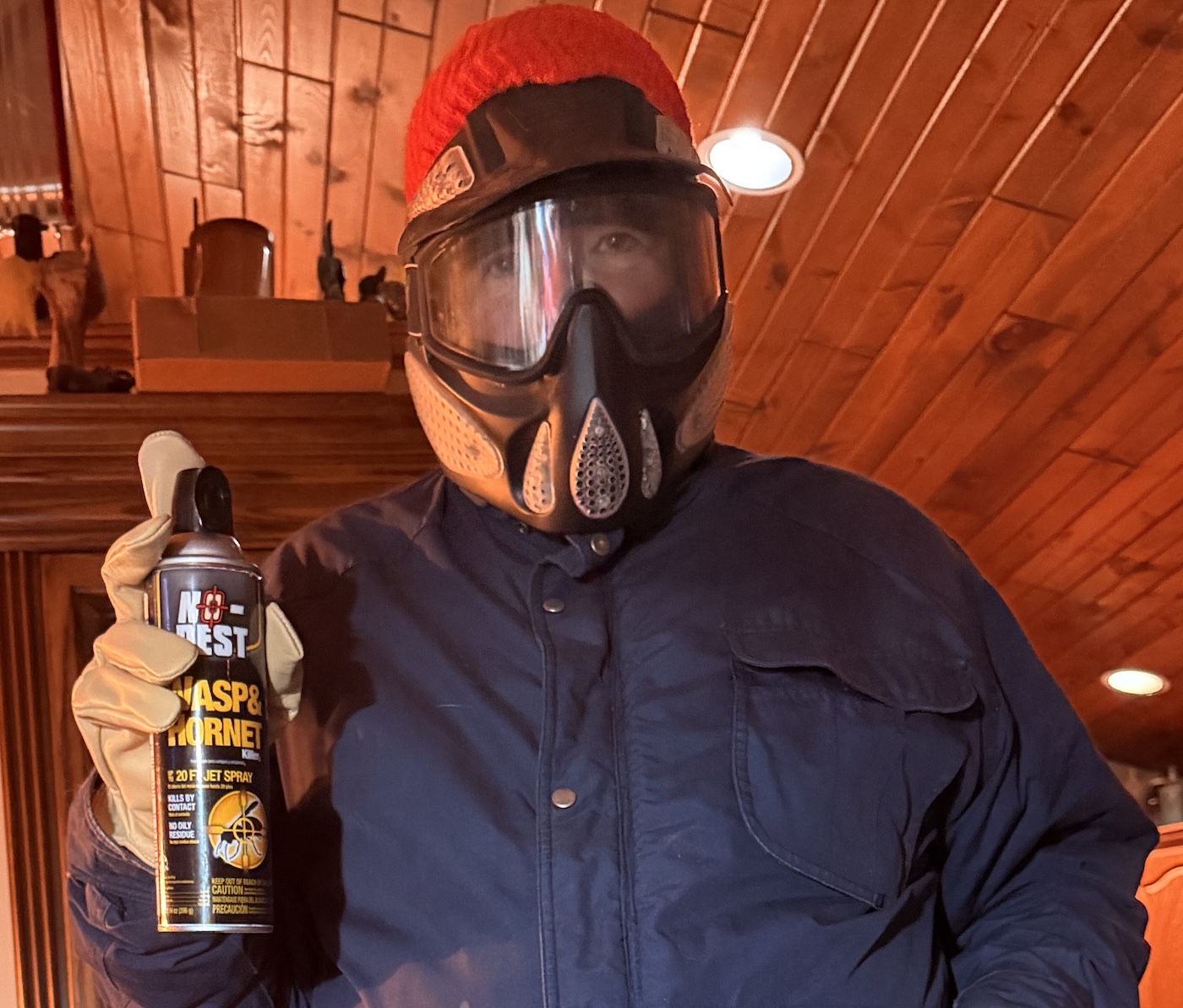
Don’t try this at home — even though I did.
Like most homeowners, I’ve tried a variety of do-it-yourself repairs at houses I’ve owned. Most of them have gone fairly well but occasionally has cost me more than hiring a pro in the first place.
When I noticed a basement window full of live wasps a few weeks ago, I grabbed a spray can of insecticide and got most of them the first try. A few tried to fly but didn’t get far. Problem solved? Nope.
I saw a lot more dead wasps on the floor than originally seen and opened a closet door where the water heater is stashed. More dead wasps. Then I looked overhead and noticed a section of the rafters had a and massive wasp nest. It was partially covered by a strip of fiberglass insulation, but bigger than a bowling ball.
I neither saw nor heard any live wasps. It wasn’t clear where the nest opening was or how they got into this basement nook. A few live wasps in my wife’s upstairs bathroom a few weeks ago led us to believe they came in through the bathroom ventilation fan. We had sprayed inside the vent and left the door closed for a few hours. Had this spray somehow spread to the basement? Very doubtful.
Most of us are familiar with the common paper wasps that build umbrella-shaped open nests in the corners of our garages, houses and outbuildings. These are not overly aggressive, but most of us get rid of them with a spray can, because we don’t want to risk a sting.
Yellow jackets are those unfriendly wasps that like to buzz around our soda and sandwiches at picnics, fairs and public areas. They are quick to sting. I’ve seen multiple ground nests of yellow jackets, and they can be full of hundreds or even thousands of angry insects.
I once shot a squirrel that landed directly on a yellow jacket entrance hole and my older brother had to run at the squirrel, grab the tail and toss it in one direction while he ran the other. I was ready to leave it, but he didn’t want to waste the meat.
At the two ends of the wasp spectrum are the friendly mud dauber, an all-black chill wasp that hangs around mud puddles to gather material for its small nests (they rarely sting even when disturbed) and the black-and-white bald-faced hornets, which build cone-shaped paper nests in the corners of roof lines and in shrubs or trees.
I nearly walked into a hornet nest in a pasture once, hunting squirrels with the same brother. He was walking behind me and screamed for me to “run and start swinging your cap!” I didn’t think twice, and he told me the hornets had followed me for about 40 yards.
It’s obvious where the phrase “mad as hornets” came from.
I sought out some professional advice from my friend, Tom Walters, of Bettendorf, Iowa, is a semi-retired nuisance wildlife trapper who used to do wasp removal.
Walters used a powerful vacuum cleaner to suck up wasps directly from the nest at night when the critters were gathered and calm.
Wasp season typically starts around August and tends to peak in September.
Once outside temperatures reach about 40 degrees, most tend to die off.
Wasps can enter homes through any tiny holes, including roof ridges, dormers and even cracks in foundations.
Those homemade or commercial traps for yellow jackets can thin the population but they are hit or miss. If you want to kill the paper wasps around your garage, leave the nest up for awhile after spraying and the strays will return to the next to get exposed to the spray.
After ordering a water-based, less-flammable spray than common hardware-store varieties, Inwas ready for battle. I put on ice fishing bibs, a parka, stocking cap, paintball mask and leatherngloves. I used a metal rod to drive through the side of the nest and immediately sprayed. Then spray dribbled out. Luckily nothing flew out. I dribbled some more around the hole, shut the closet door and then shut the room door.
A day later, minus the protective clothing, I returned with a different can and punched another hole. This can worked with force and I was able to spray plenty of pesticide into both holes.
Again, no signs of life.
At some point, I will remove the nest but will wait for the poison to do its job. Sometimes pesticides are a good thing.
Next time, I’ll probably take my wife’s advice and call the professionals.
Ross Bielema is a freelance writer from New London and owner of Wolf River Concealed Carry LLC. Contact him at Ross@wolfriverccw.com.


