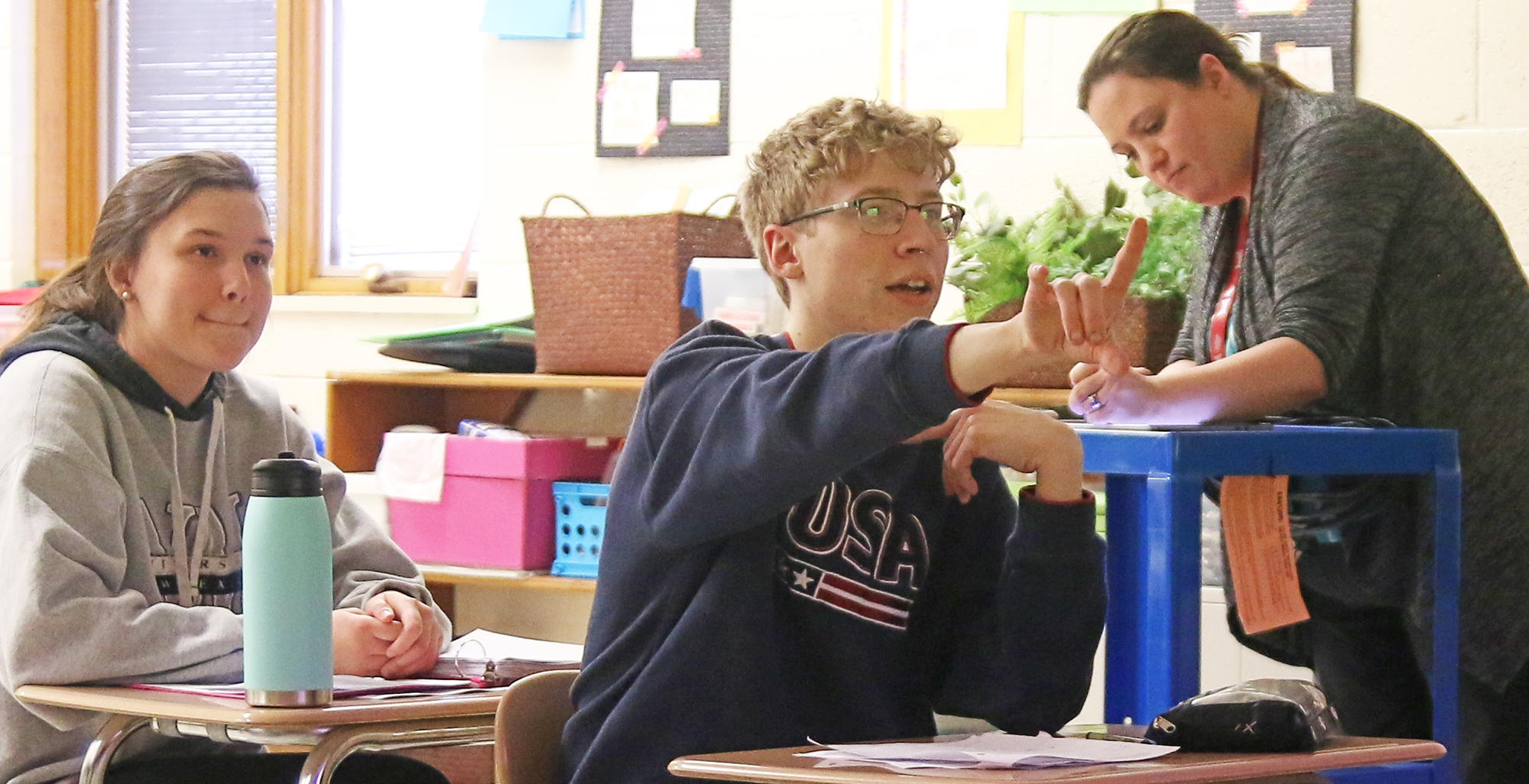
SHAWANO — Most area schools have higher high school graduation rates than the state average, with one school boasting a 100% graduation rate.
The state of Wisconsin graduated nine out of 10 students in four years during the 2018-19 school year, a rate of 90%, according to new data made public this week by the Department of Public Instruction. Most area schools claimed graduation rates in the low to mid 90s.
The Gresham School District saw 100% of its students walk the aisle and collect their diplomas last year, while Pulaski and Tigerton school districts boasted high rates of 95.7% and 95.8% respectively.
Ben Heninger, Gresham’s high school principal, noted that the school’s smaller size makes it easier to provide one-on-one attention and differentiated instruction to students who might be falling behind.
“If they’re missing credits, if they’re falling behind, they’ve got somebody who’s not only going to be able to catch them but show them a way forward,” Heninger said.
One of the Gresham’s interventions is the 10th Hour program, which is available for students after school to work with staff on what’s causing problems and giving them a way to keep up, according to Heninger. The students can get as much one-on-one help that they need.
“It’s a mandatory program for those students that aren’t making the grade,” Heninger said. “This is to provide the greatest structure for improvement, not to be punitive.”
As far as communicating with parents about their children’s grades, Heninger said the administration encourages teachers to call more than email if there are any snags in order to help ensure parents are in the loop.
“I think a lot can get lost in translation with email, so we try to have that personal connection with all of our students and their parents,” Heninger said.
Meanwhile, the Shawano School District saw an 89.2% graduation rate in four years. The five-year rate, however, jumped to 95.2%. Students are not required to finish in four years, and may remain in school until age 21.
The district is making some efforts to improve its rate to at least 93%. In February, the district agreed to explore hiring a graduation specialist in concert with the Shawano County Boys and Girls Club to work with up to 20 at-risk Shawano Community High School students and try to help them focus on school again.
SCHS principal Scott Zwirschitz said that his school has generally been at or above the state average annually. There are programs like the Core program in place where staff members work with students more than just in the classroom to make sure they keep on track with schoolwork. There’s also an alternative program that has students working more with just one teacher, as well as Plato, an online class system for students who have fallen behind on credits.
Those programs go above the standard interventions SCHS has in place, including meeting with students and parents when it looks like grades are slipping downward and weekly discussions with the school counselors to examine which students are falling behind and figuring out what can be done to help.
“We want every student to graduate,” Zwirschitz said. “When they set foot in our building as freshmen or whenever they transfer here to our building during their high school career, our primary focus is two things. One, that they graduate. Two, they have the ability to be productive citizens.”
Only three other school districts in the area had lower graduation rates than Shawano’s. Clintonville School District had an 83.9% rate for four years, while Bowler School District’s rate was 83.3%. Menominee Indian had the lowest rate in the area with 73.4% of its students graduating in a four-year period.
Menominee Indian School District Superintendent Wendell Waukau said in an email to the Leader that students in his district are impacted by outside issues that make it difficult for them to be in class every day learning.
“A number of our students face life situations, which are often times more urgent than school,” Waukau wrote. “This translates into absences, which then affects students’ ability to attend school, which affects learning, but it doesn’t mean we give up on them but rather help them develop the resiliency skills to overcome these situations.”
Some of the things Menominee Indian is trying to do to help students through includes mental health resources, attendance success mentors, graduation coaches and extended learning opportunities at the College of Menominee Nation and Northeast Wisconsin Technical College. Waukau pointed out that while one in four students didn’t make it to graduation in a four-year period, statistics show they will keep going and get there eventually.
“Our data shows that if our students don’t graduate in four years but stay with us an additional year or two, they cross the finish line and earn that high school diploma,” Waukau wrote. “A 95% graduation rate in seven years shows the resiliency in our students.
Bonduel saw an above average graduation rate with 92.4% of its senior class graduating in 2019.
High school principal Tim Mayer attributed several things to the higher graduation rate. Besides providing mental and emotional support to students, Bonduel High School provides differentiated instruction to engage students in learning. The school also works to ensure clear communication with parents and community members to create a web of support for students
“As you know, helping students graduate takes a lot of time, effort, and motivation by all our stakeholders and the students,” Mayer said. “Our staff prides ourselves on going above and beyond to help our students.”
Mayer said the school will continue to improve by creating a curriculum that continually challenges students and prepares them for real-life situations, along with instilling a belief in students that they can persevere through adversity, making graduation an attainable goal.
Travis Schindel, a metal/welding technical education instructor at Bonduel, noted that hands-on classes such as tech ed can help keep students in school who might otherwise lose interest.
“We keep kids actively engaged in school,” Schindel said.
lpulaski@newmedia-wi.com
Most high schools see grad rate above state average