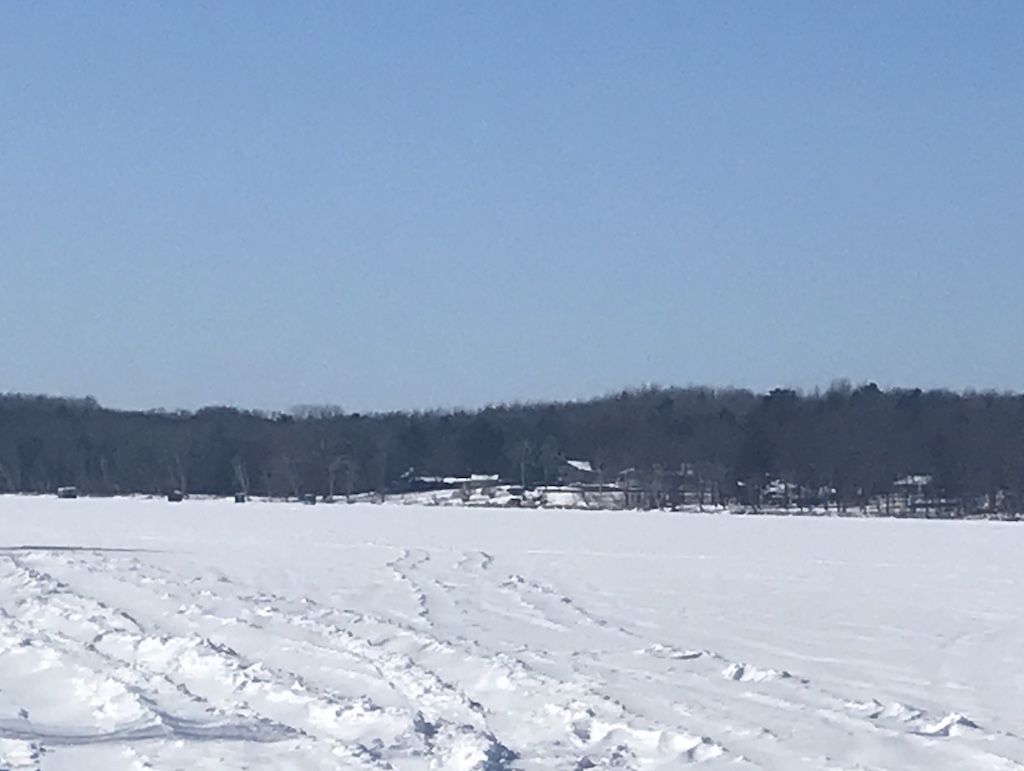
OCONTO — A one-year draw-down of the Machickanee Flowage was among the water quality projects discussed Thursday as the County Board got an update on the progress of the Oconto County Healthy Waters program.
“This is a proposal, and it’s still a work in progress, but we’re working for a draw-down starting in September of this year until September of next year,” said Steve Dupuis of the Machickanee Advancement Association, one of four lake associations that reported on studies and projects affecting 27 of Oconto County’s 375 lakes.
The draw-down will help battle invasive species and weeds.
Lowering the water flow through the Stiles dam for a year “would add compaction to the flowage, and it would also freeze out some of these invasive species we have on the flowage — not to mention some of the other plant life which is clogging up the waterways,” Dupuis said.
The project is being planned in cooperation with the Oconto Electric Cooperative and Federal Energy Commission.
The state Department of Natural Resources is planning an informational meeting this spring, at a date and time to be announced.
Two years into a program where the county helps lake associations fund studies and projects through the DNR, more than $581,813 has been granted with more to come, said Ken Dolata, of the county Land Conservation Division. Smaller county grants and private dollars from the lake associations are also part of the mix.
“We award our funding before they apply to the DNR, so they get extra points on their application,” Dolata said. “It’s a statewide competition. It’s getting harder and harder to get these grants because so many organizations are applying for them.”
Dale Mohr of the University of Wisconsin-Extension traced the roots of the Oconto County Healthy Waters program to five or six years ago when local sportsmen, farmers, ag businesses and landowners convened to talk about water quality.
“We had a lot to talk about, whether it’s 1,000 miles of streams or our 375 lakes,” Mohr said. “It doesn’t matter who you are. You could be using it for your business, or drinking it or using it to recreate. But we really wanted to have the healthiest waters in Wisconsin, so that’s the rally cry.”
After a 24-month study, the effort has focused on the 61 lakes with public access, which Mohr said are the most endangered by Eurasian watermilfoil and other plant species. With 27 studies in progress, the goal is to cover the remaining 34 lakes as well.
“We’re trying to get everybody on the same sheet so we understand what’s happening on their lakes by the end of the process,” Mohr said.
Steve Heimerman, president of the Oconto County Lakes and Water Way Association, said it’s not just a local issue.
“Lakes throughout Wisconsin are under assault,” Heimerman said. “Aquatic invasive species are probably the worst issue, because they cost an awful lot to deal with and they create a lot of problems. We’re getting way too many nutrients into our waters, algae blooms and excessive weed growth, and in many cases way over-development on our shorelines.”
Control projects for any one of these issues are very expensive, so lake associations can’t deal with them on their own, he said. Oconto County generally has smaller lakes – 49 of the 61 lakes are less than 200 acres – with not that many property owners.
“You really don’t have a strong population of people, so you don’t have the amount of property owners that can can foot the bill to pay for these things,” Heimerman said.
He urged the County Board to finish the Oconto County Lakes Project, maintain the Healthy Waters cost-share program for the long-term and consider hiring a county staff professional whose sole job would be waterway health management.
“When we only have 10% of the population on a typical lake that is capable of working on the problems, much less half of them being gone for the winter, having professional help would be greatly appreciated,” Heimerman said.
At the very least, lakes quality needs to be maintained to preserve Oconto County as a tourist destination, he said.
“If people can’t use the lake, they’re not going to visit a lake. If people can’t use the lake, they’re probably not going to buy a property out there,” Heimerman said, citing studies that indicate residential property values go down as perceived water quality goes down.
After the presentation, several supervisors spoke in support of the water quality initiative.
“If we don’t step up front and speak out and actually do something physical, we’re going to lose it,” Supervisor Ken Behrend said. “If all we do is talk and not do anything and ignore our water, yes, you will lose your real estate, and yes, you will lose your livelihood, and yes, the recreation people will go someplace else, and this county will lose a whole lot of money.”
Members of the board’s Land Conservation committee described what they saw when the panel took a tour of the lakes last fall.
“I was amazed at how bad it is,” Supervisor Leonard Wahl said.
“It actually looked like you took green carpet and went over the top of the water,” added Supervisor Bart Schindel.
Machickanee Flowage draw-down planned for this fall