
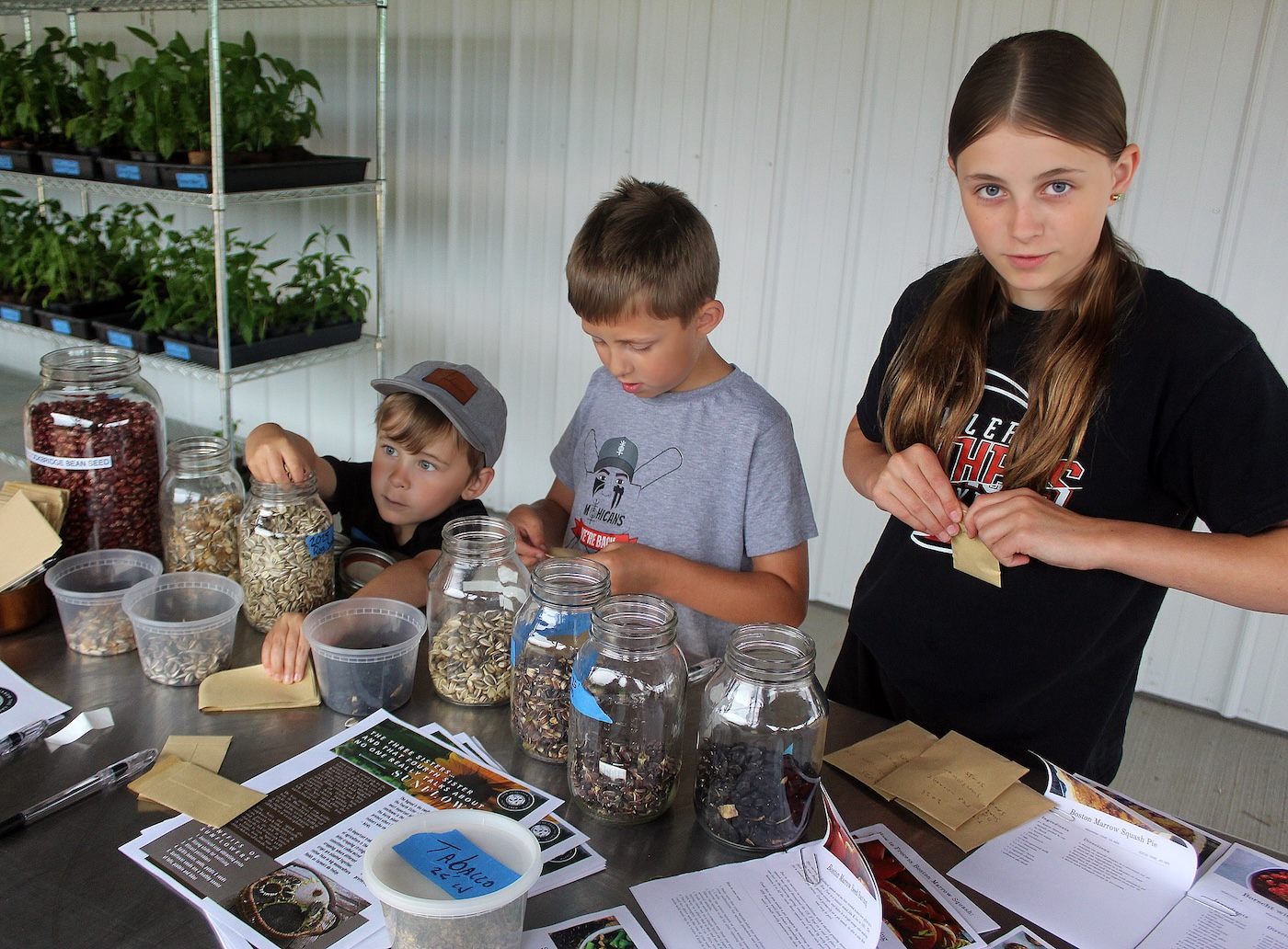
Keek-Oche Tribal Farm held a soft opening June 11 of its new farm building, dedicated a tree to a tribal council member for the Stockbridge-Munsee Band of Mohicans and showed tribal members they’ve come a long way to help achieve food sovereignty.
Keek-Oche, which stands for From the Earth, started out a half-acre learning farm in 2018 in the Town of Bartelme where tribal members could learn traditional ways of growing food that were sustainable. In that first year, 4,250 pounds of food were harvested.
That amount has tripled in the last eight years as Keek-Oche has grown to six acres with hoop house-style greenhouses to extend the amount of time that food can be grown in the area. It has reached the point where the tribe is almost able to feed the entire community.
The family of Ella Kazik, a member of the tribal council who died at home May 30, planted an apple tree at Keek-Oche not only to honor the beloved elder who believed in cultural preservation but also to serve as a point for walking trails that will be part of the farm.
Kim Hoffman, Kazik’s daughter, said her mother was proud to make a difference on the tribal council, and she was pleased to see council members in attendance. She said the tree being planted will serve as a symbol of the love Kazik had for the Stockbridge-Munsee people.
“Our mother was a gift,” Hoffman said. “She grew from humble soil — no running water, no electricity. Yet she flourished. She gave sweetness to us, her community, her grandchildren and even her great-grandchildren. Today, we plant this tree in her honor, and her love will continue to blossom. offering sweetness and strength to every generation that follows.”
Hoffman told an Algonquin story about apple trees and how they are seen as a gift to the people from a spirit because there was a time when there was no fruit on the earth.
“As the tree grew, it offered more than fruit,” Hoffman said. “It was a place of gathering, laughter, stories and connection. Its apples reminded the people that sweetness is not only something that we taste, but something we create through love, family and community.”
Maria Duits, Stockbridge-Munsee agriculture manager who oversees Keek-Oche, said community interest has allowed the farm to flourish and expand in the last eight years.
“There’s no purpose in us continuing to grow bigger if people don’t want it,” Duits said to a group of more than 50 people on the farm. “Clearly, you people want it.”
The farm was born out of a strategic plan developed by the tribe years earlier, Duits said in an interview after the welcome ceremony. Food sovereignty was a main factor, as tribal members had to travel quite a bit to grocery stores to get the food they needed.
In the first year, there was a small farmers market on the site, and a few tribal members indulged in some of the available vegetables.
“From there, the farm has pretty much grown exponentially with the support from tribal council,” Duits said.
Four of the existing acres are in cultivation, she said, and there’s also a pollinator habitat with bees that the tribe utilizes. An apple orchard is also part of Keek-Oche, and tribal officials also grow repatriated Mohican and Lenape seeds.
The new building will serve as an education space, as well as storing much of the food harvested on the farm like squash, onions and potatoes, according to Duits. The building will allow farmers to dry traditional corn and beans on a larger scale.
“We’ll do some recipe development with the Indigenous foods and inspire people to try new things that they haven’t been able to have in their homes for a few generations,” Duits said.
Wet years recently have really helped Keek-Oche to flourish, especially since the farm is in a sandy area and water has been able to get to crops where needed, according to Duits.
“We’ve been able to get some irrigation to our fields, and everything’s staying wet,” she said.
The walking trails planned for the future will provide more educational opportunities through language kiosks, Duits said, but they will also provide a path for tribal elders and others to reach the pollinator areas and harvest tribal medicines.
Food sovereignty has always been a necessity for the Stockbridge-Munsee and other tribes, but with food prices continuing to go up at unsettling rates, having Keek-Oche available to provide food to the community helps to curb any sticker shock when it comes to food.
“We’ve definitely taken those food prices into consideration when we’ve planted the fields this year,” Duits said. “We’re doing a 30% increase in planting for the fields this year, and the community is going to come out in droves.”
Brock Schreiber, one of the Stockbridge-Munsee’s Mahican language teachers, offered up tobacco and honey before saying a prayer in the traditional language and said Keek-Oche shows how fortunate the tribe is.
“I was talking to one of my friends up in Keshena recently, and he said as we were in this new farm building, ‘You know, our ancestors prayed really hard so we could have a life like this,’” Schreiber said. “I just thought about that on my way here and how good of a life that we do have.”
Schreiber recounted how tribal ancestors struggled for survival, not always having the food or clothing they needed, and he suggested that tribal members remember that as they enjoy food on the farm.
“We have a life with such abundance,” Schreiber said. “So when I say this prayer, it’s in appreciation to our ancestors for everything they did and sacrificed so we can have the life we have and all of this abundance.”
Schreiber added that he sees Keek-Oche someday serving as the main source of food for the Stockbridge-Munsee.
“Pretty soon, it won’t be long before we can feed our whole community from this land right here, and that’s really exciting,” Schreiber said.
lpulaski@newmedia-wi.com
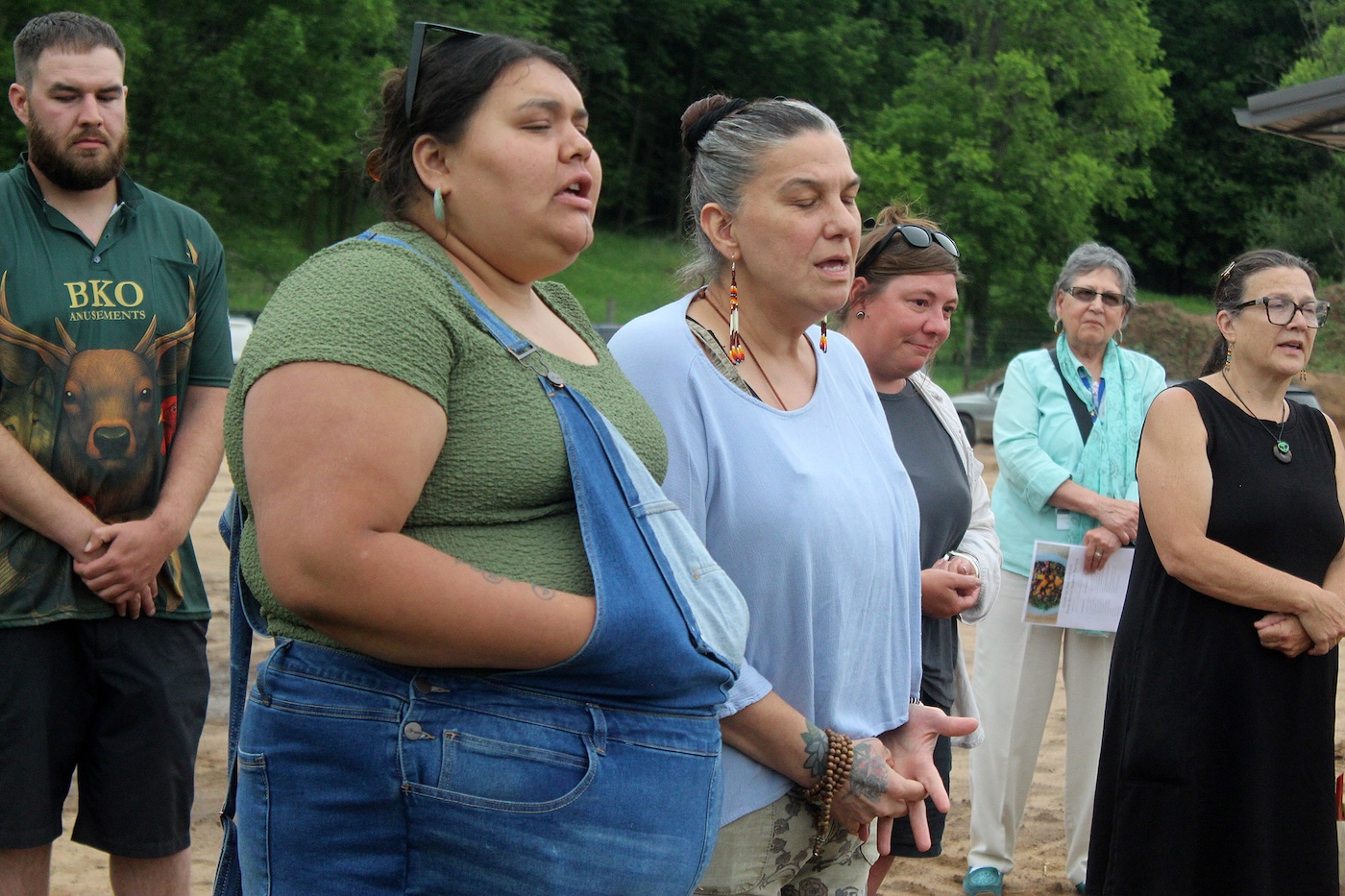
Janiyakuha Webster, left, and Kim Hoffman sing a song to honor the late Ella Kazik during a ceremony June 11 at the Keek-Oche Tribal Farm in the Town of Bartelme. (Lee Pulaski | NEW Media)
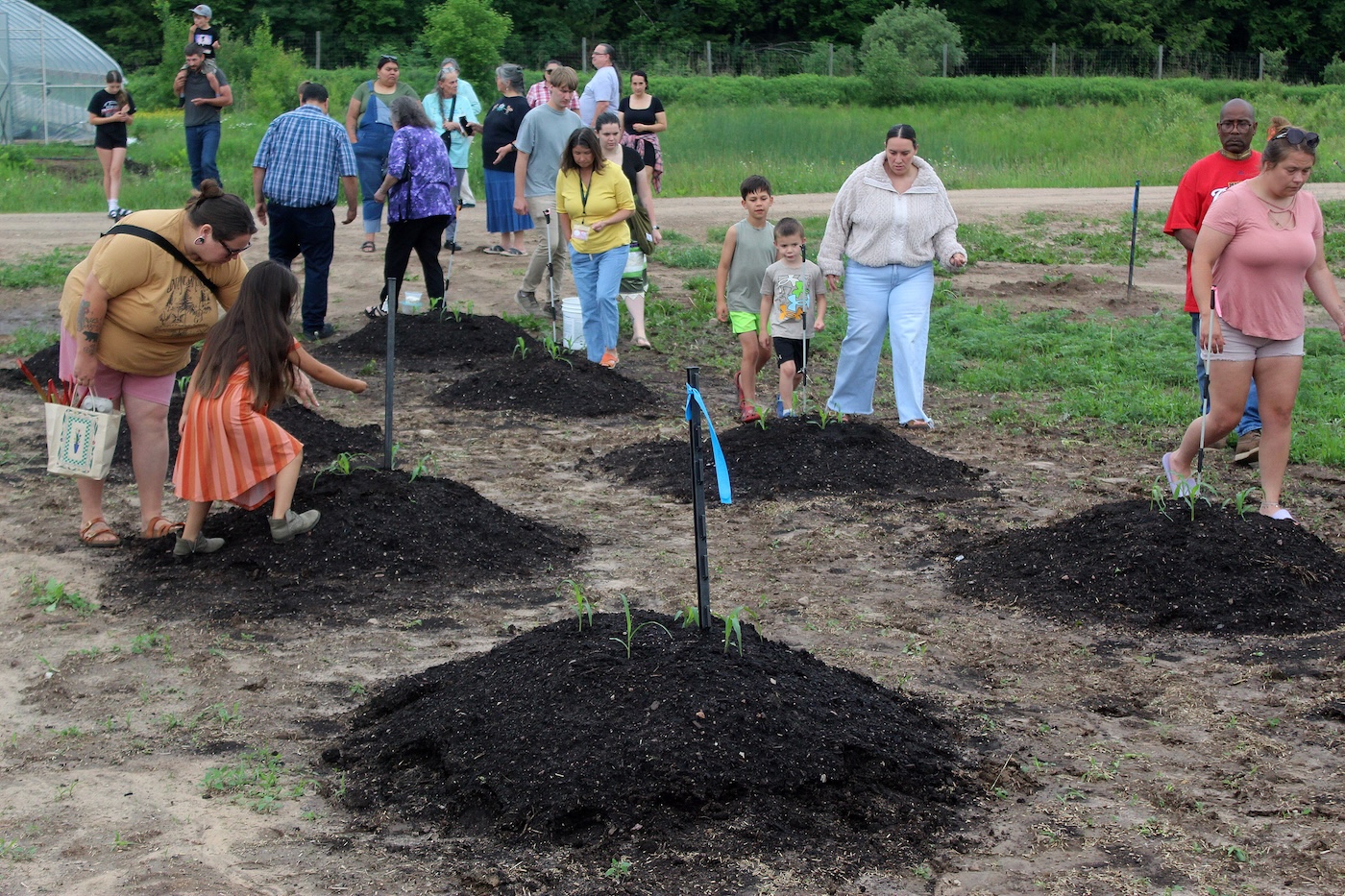
Members of the Stockbridge-Munsee Band of Mohicans gather around some of the planting mounds ready to grow food for the 2026 growing season during an open house June 11 at the Keek-Oche Tribal Farm in the Town of Bartelme. (Lee Pulaski | NEW Media)
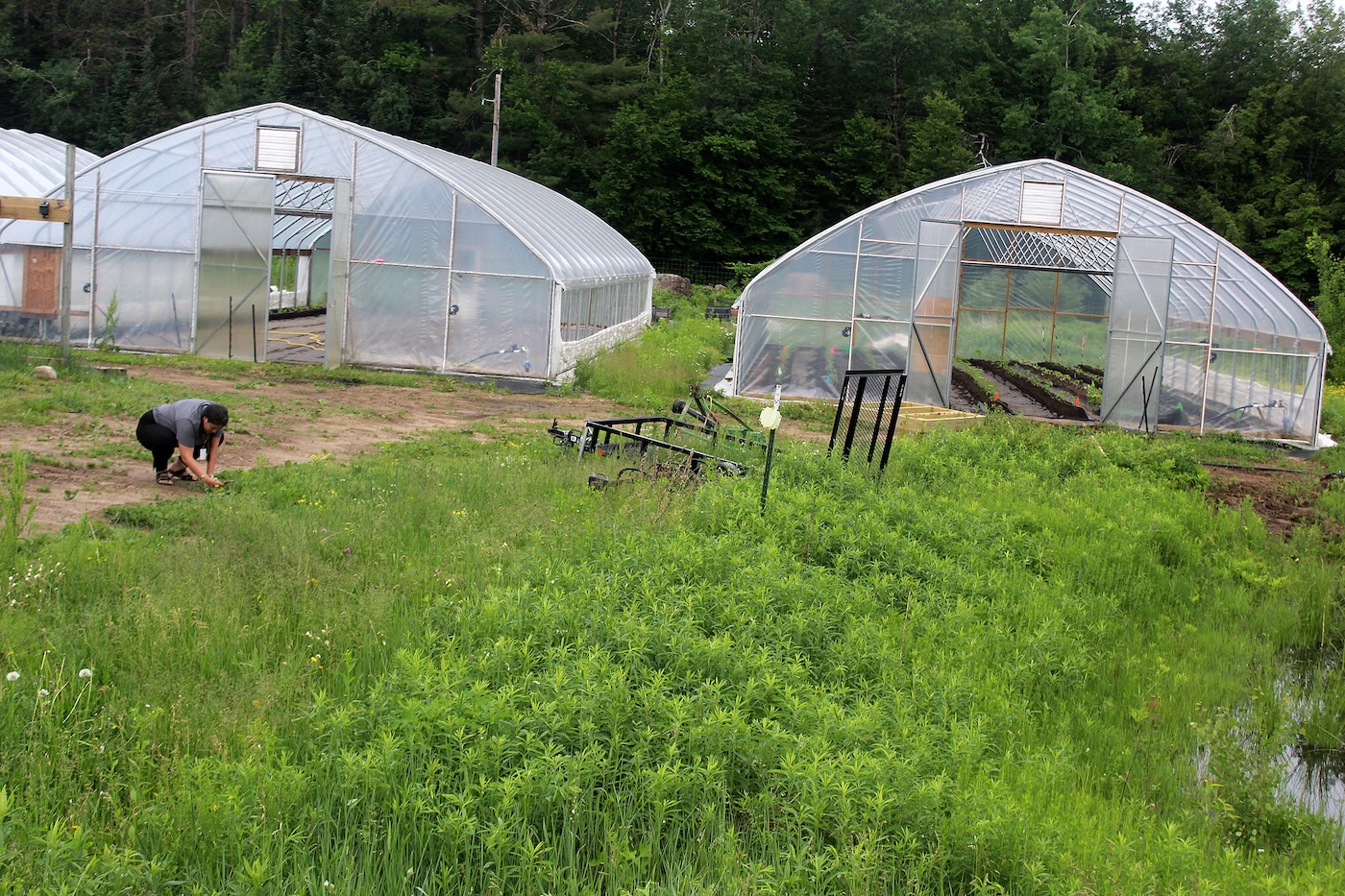
Hoop house-style greenhouses are among some of the things added to Keek-Oche Tribal Farm in recent years, extending the growing season for fruits and vegetables. (Lee Pulaski | NEW Media)


