So this is a slightly different food column. Don’t worry; there is still a recipe to follow, but this one includes a couple Menominee chefs helping other indigenous community kitchens feed their elders and members.
Leah Husby and I were asked to write healthy recipes and do some hands-on training for some indigenous community kitchens. Fifty recipes in total were created and handed to the communities. They included indigenous ingredients combined with some contemporary techniques. With the recipes, they also did in-person training with the community cooks.
Now I want to clarify that we are not the ones in the kitchens doing all the hard work. We just assisted with some helpful recipes and tools they have the option to use or not. The community cooks are the real heroes here. They are the ones who show up day in and day out and create the community meals. So we always make sure to tip our hats to them.
This project took months in the works. Rewriting 50-plus recipes for communities is no easy task. We made a wide variety to try to cater to most communities. We have to factor things in, like availability to product, community sizes, and also each community food preferences. We can’t just write up some type of grilled squid dish and believe communities will recreate it. So we made dishes that we thought would actually work — soups, braises, rubs, sauces, breads, teas, and also added in some recipe terminology.
What really helped with this project is when we spoke to the community cooks. We had the opportunity to ask them questions, like what are popular food items in their communities, what type of product do they have availability to, are the recipe templates going to be easy to follow, and what traditional dishes are important to them and their community.
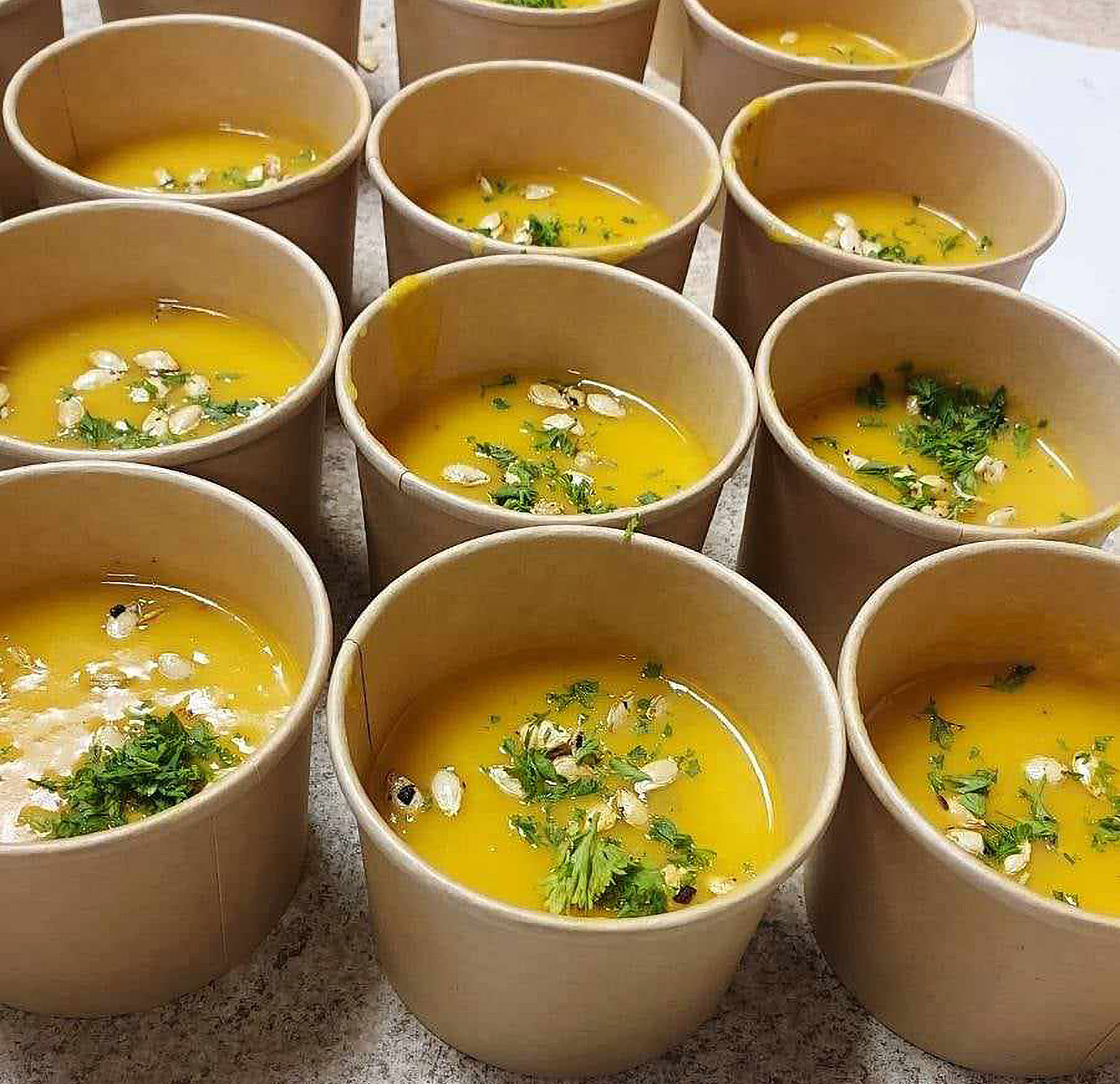
Along with speaking to the cooks, we had a chance to meet them in person for hands-on training. During the training we showcased a seasonal soup, the one shown in the recipe today, and a quick bread along with a tea and a sauce. Also what was important is we showed how to properly do recipe conversions.
As a chef, I feel recipe conversions should have a paragraph of its own. We all can pretty much double or reduce a recipe by half, right? Well, what about if you want to take a recipe that yields 40 portions at 8 ounces per person and make it into 145 at 6 ounces per person? What about volume versus weight measurements? Things like this are what we taught them. We shared a formula for this type of conversion, which then any recipe size will work, now due to the fact that this formula makes it possible to convert the recipe to the size of your audience.
So, the winter squash. Yes, we have an abundance of them this time of year. Let’s not forget to add pumpkins to that list! This recipe is a soup puree, which everyone has probably made some type of squash soup before, but how many of us had made a pureed soup? Squash has been a part of indigenous cuisine for thousands of years — one of the three sisters.
Availability is pretty easy for all of us to find. Try the local Save A Lot in Keshena, any local grocery store or try local farms. Try growing some.
Any questions or suggestions, let me know. Need help with a recipe? Want to learn the formula mentioned in the article? Just reach out. In the meantime enjoy this squash soup. Thank you.
BUTTERNUT SQUASH SOUP
1 butternut squash
2 apples
1/2 onion
1/2 cup leeks (white parts only)
1/2 cup apple juice (sauce)
1/4 cup brown sugar (sauce)
1/4 cup apple sauce (sauce)
1 tablespoon melted butter (sauce)
1/2 teaspoon of sage, garlic powder, rosemary, cinnamon, and black pepper
1 quart and 1 cup of vegetable stock
• Preheat the oven to 425 degrees. In a cooking sheet or casserole dish combine the squash, apples, onions and leeks. Set aside. In a small bowl combine the apple juice, melted butter, brown sugar and spices. Pour over the squash and bake for about 1 hour or until the squash is fork tender. Scoop out the softened squash from the skin and the vegetables and add to a large soup pot.
• Add in the stock and cook for 15 minutes, stirring occasionally. Using an immersion blender or a regular blender or a food processor, puree the squash/vegetable/stock blend until completely smooth. If using a regular blender, do not seal the lid. Blending hot liquids with the lid on can cause the heated product to expand, risking injury from the hot liquid. No blender? Use a potato masher.
• Return pureed contents to the soup kettle. Heat for 10 minutes over low heat. Ladle into bowls.
• Tips, can save and roast the seeds for added nutrients and a garnish.
Chef Francisco M. Alegria is from the Menominee Reservation and has Indigenous roots from Mexico. He is a Teppanyaki master who owns an Indigenous/Asian fusion catering business and serves as a nutritional educator for the Menominee tribe. Readers can contact him at falegria@mitw.org.
Rewriting recipes helps Indigenous tribes