I was so excited the first time my husband and I decided to “snowbird” in Florida. Along with diving into the crashing waves and sinking into warm sands, I had birding on my list of things to do. No. 1 on that list was to see a roseate spoonbill. Roseate spoonbills live in South America, Central America and just a few states in the southern United States, including Florida. If I wanted to see one, this would be my chance.
Why the roseate spoonbill? It is a quirky-looking, wading bird. Its body is beautiful with fluffy, pink plumage, scarlet wing patches and orange tail, while its head is bare and pale-green, with red eyes and a long, flat, spoon-shaped bill. It is this unique contrast that intrigues me. If I was fortunate enough to see one, my trip would be a success. After a few failed attempts, I was finally blessed with seeing not only one roseate spoonbill, but many throughout my time there.
Fast forward three years, a roseate spoonbill traveled over 1,600 miles out of range to come to Ken Euers Nature Area in Green Bay, just 6 miles from my house. I wonder why it came here so far from home. Perhaps it is simply doing what I did when I left the nest — opened my wings and flew off to explore the world.
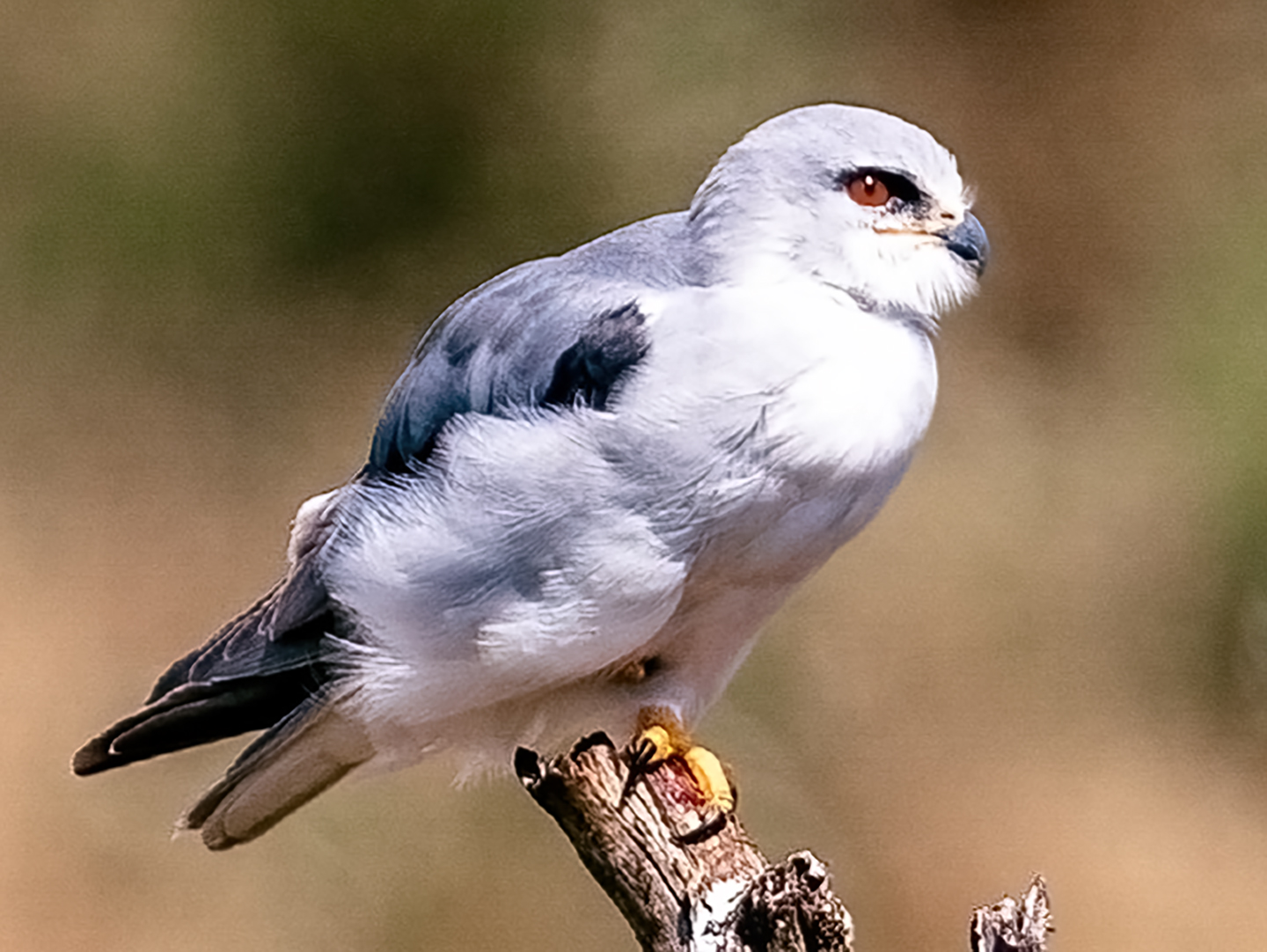
Because of this rare sighting, my curiosity led me to a Facebook group called Wisconsin Rare Bird Alert to see what other birds may be gracing Wisconsin with their presence. The most recent post was two days old and reported seeing a white-tailed kite near Potawatomi State Park. This is exciting news, as you’d usually have to go to California or Texas to see this bird.
Not knowing if the bird was still around or long gone, I jumped in my car and headed toward the park. All the way there I’m asking myself, “What is the likelihood it will still be there? Am I foolish to think there’s a chance?” All I knew is that I had to try.
When I arrived at the described location, there was a car parked alongside the road with two people standing beside it. I parked behind their car, walked up to them and asked if they were there for the white-tailed kite. They replied, “Yes, we are.” I replied, “Me, too,” as if my question hadn’t made that obvious. I raised my binoculars and started to look across the sky, hoping to see it flying.
That’s when I heard music to my ears: “I have it right here in the scope,” one of the birders announced. I couldn’t believe my luck. I bent over the scope, looked into the eyepiece, then low and behold, I saw an elegant bird sitting in a tree. With a white head and body, red eyes, black shoulder patches and gray wings, this bird is unlike any raptor I’ve ever seen. We looked at it for hours. I felt so blessed to have observed this magnificent bird and to have made friends with these kind birders.
With continued curiosity, I returned to the Wisconsin Rare Bird Alert Facebook group and counted 34 rare species that have been reported this year alone. For example, the rufous hummingbird makes one of the longest migratory journeys of any bird traveling from Alaska to Mexico. Sightings reported on eBird, (an online database of bird observations created by Cornell Lab of Ornithology), shows there was one at a bird feeder in Owen.
The flame-colored tanager resides in the mountain forests of Mexico and Central America. However, there were two sightings in the United States, one in southern Arizona and the other at Sheridan Park in Milwaukee.
The Pacific Loon, from the tundra lakes of northern Canada, came to Sauk County. The black-legged kittiwake, an ocean gull that is rarely inland, was seen at the Port Washington Harbor. The Eurasian wigeon, which breeds across Iceland, northern Europe and Asia, migrated to Columbia County.
What is causing these birds to travel so far out of their range? While there is no one clear answer, many suspect they are blown off course by a storm system, or warmer weather is expanding their range.
While I worry if their off-track adventures put them in harm’s way, I am encouraged by the reaction these uncommon visitors have had on us. People, young and old, are venturing into nature to see them and, in doing so, are likely to enjoy other birds. Perhaps these rare birds will be the spark we need to spread awareness of and appreciation for all birds. Dare I hope it will inspire action for their well-being and the welfare of all of our natural world? Yes, I do.
Lisa Jansen is a conservationist, nature writer and award-winning photographer. She specializes in raising awareness of birds and butterflies of the Midwest.
Rare birds make appearances in curious spots