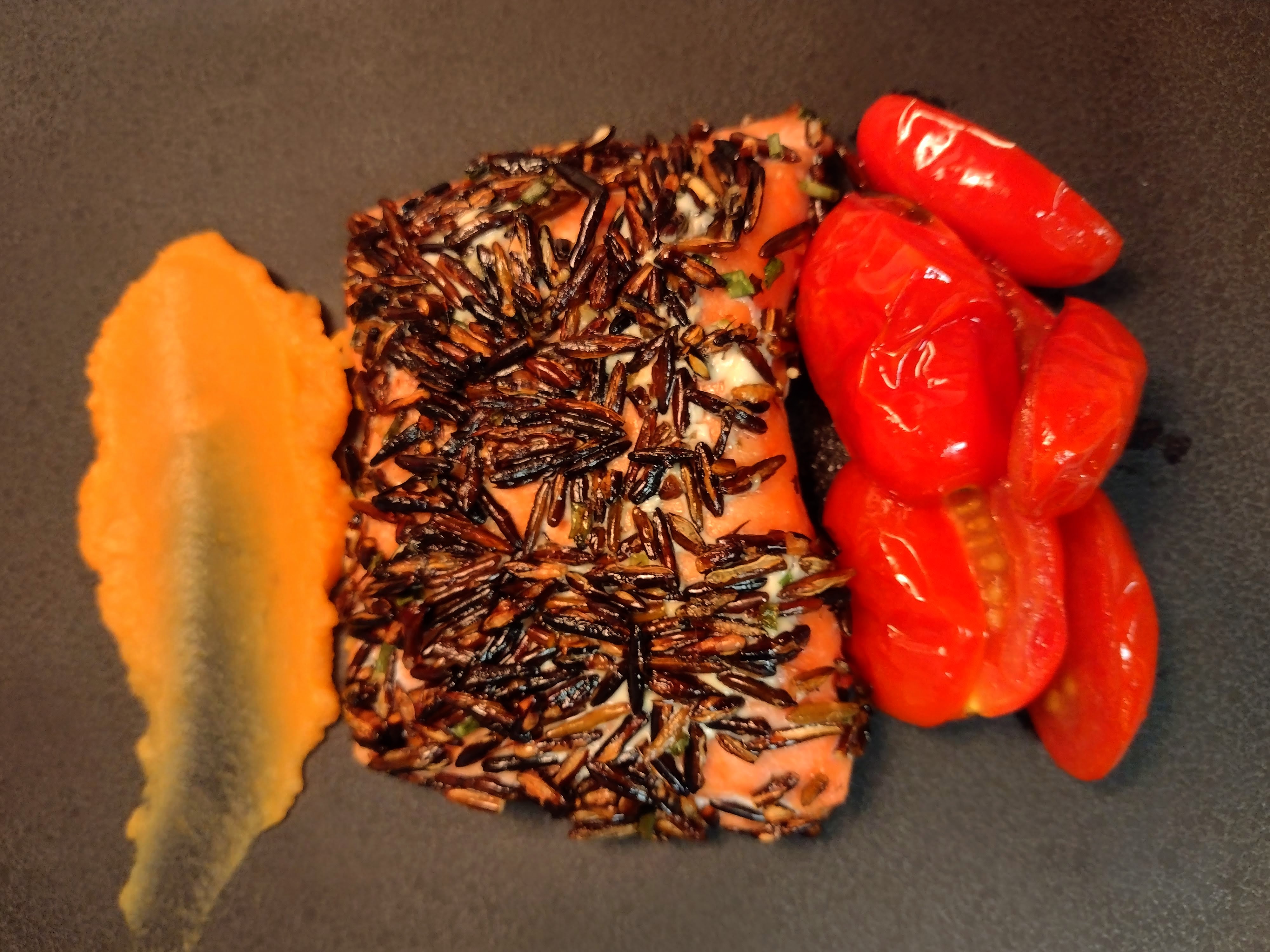
Wild rice is an important part of who we are as Menominee; but as a chef — a Menominee chef — it sits as one of my top ingredients to choose from. This gluten free “good berry” is a go-to must in the culinary world.
I’ve been cooking professionally for almost 20 years; most of my experience is in Japanese cuisine. So what does that have to do with my now Indigenous-fusion catering business? Well, rice, of course. Rice is used in pilafs, risottos, flours for sauces, soups, desserts and even drinks. Rice is a dietary staple for more than half the world’s population.
I’m sometimes asked what is a Menominee recipe, or what is the name of a Menominee dish. After hours spent searching, we have come across some pretty cool recipes and techniques along the way, but we still have a long way to go. I guess that’s a part of reclaiming some of our culture.
Wild rice is a traditional food that we see in ceremonies, gatherings and other events. My goal is to not only keep some of those traditional techniques alive, but to also introduce contemporary uses of wild rice. Use it in some of our everyday meals, on a Tuesday, use it as a flour to thicken our gravy. Make it a comfort food. It can be popped like popcorn for a healthy dessert topping or to crust a fish as we see in our recipe chosen today.
There are different applications for our types of wild rice. Our black paddy wild rice is slightly more dense and is great for popping. Wood-parched rice has more of our traditional flavor profile from being cooked over wood fire and is great for our pilafs. Those broken bits of rice? Use them in soups, or puree them to make a binder for some meatballs.
All of these versions of wild rice can be found at Save a Lot in Keshena. Also our local Menominee Food Distribution distributes wild rice from an Indigenous provider from Minnesota.
Reclaiming some of the Menominee culture through our foods like wild rice is no easy task. There are no classes in culinary school that teach Indigenous foods. I can tell you that wild rice is high in protein and has a neutral pH, which makes it perishable once cooked. I can tell you its holding and cooking temps, but the cultural value is something we are learning as we go. Hopefully, our catering business can spear point the way for younger Menominee chefs.
Wild rice, although it is Indigenous and important to us Menominee, it’s good for all of us as humans. It has fiber, antioxidants, folate, magnesium, phosphorus and other vitamins. No matter what language we speak, its health benefits are good for all of us.
Let’s go out there and try some wild rice recipes, make your own recipes, experiment, and don’t be afraid to make some mistakes in the kitchen. Wild rice was a gift to us, and it’s still here, as are we the Menominee people.
WILD RICE CRUSTED SALMON
6 ounces salmon filet (skinless)
1½ cups uncooked wild rice
2 teaspoons paprika
2 teaspoons garlic powder
2 teaspoons onion powder
2 tablespoons maple syrup or honey
Salt and pepper to taste
2 tablespoons sunflower oil
In a saute pan, medium heat, add uncooked wild rice. The rice will begin to pop, keep shaking the pan. Once the rice stops making noise, then take it out of the pan. Place rice inside a grinder or bowl. Grind rice just to loosen and release more aromatics. Keep it coarse. Add spices. Brush maple or honey over fish. Cover fish in wild rice flour mix. Heat saute pan to medium heat. Add oil and saute fish both sides until internal temp of 145 degrees. Serve, enjoy.
Chef Francisco M. Alegria is from the Menominee Reservation and has Indigenous roots from Mexico. He is a Teppanyaki master who owns an Indigenous/Asian fusion catering business and serves as a nutritional educator for the Menominee tribe.
Menominee traditions include touch of wild rice