
Anguish flooded my heart as my brain registered what I saw. There, on the road just past our driveway, lay my sweet kitty, Fred. Lifeless.
My husband and I were on our four-wheeler, and immediately I felt the need to get Fred off the road.
“Let’s go back and get a guinea sack,” my husband suggested quietly.
Returning immediately, he gently placed Fred in the sack I had opened and, crying, I crumbled back into the four-wheeler.
Back in the day when I was a small girl on my home farm, we had a bunch of cats. They were there for a purpose — the circle of life — keeping mice at a minimum. One older one was the grandma of every cat on our farm, and she procreated regularly, keeping our mice at bay. Her offspring became our playmates, and we dressed them up in doll clothes when they were old enough.
Later, when I married my husband, we had cats on our farm, too, strictly for mice control.
Our cats were skittish, and I never considered them pets, really. They were just there.
When we sold our cows, the cats we had on the farm disappeared, one by one. We started noticing mice, and that got my husband’s attention.
“We need some cats,” he proclaimed one day.
I heard of a gal named Sarah Magee who rehomed cats. Contacting her through her organization, Joy’s Place Animal Rescue in Gresham, she brought out two spaded cats in a crate complete with food, blankets, kitty litter and bowls.
“Leave them in the crates for two to three weeks, Kay,” she advised. “You’ll soon gain their trust as they discover you are safe and a good provider for everything they need.”
I was instructed to feed and water them daily, and clean out their litter box with a scoop (provided), talking and moving quietly around them.
The first while they hissed at me, squeezing together in the back of their crate like I was going to kill them as I tended. Soon they started, little by little, not hissing, but not really friendly, either.
Presently came the day they were to be released. I was nervous. I’d put so much effort into this. Leaving their food and water dish close by, I opened the door and left, hoping against hope they’d not just fly the coop.
They stayed.
Now they’re my little lovers, curling themselves around my ankles and many times vocally greeting me good morning at the barn door before I even open it up.
Soon we had a visitor. An old battle-scarred yellow cat would mosey his way up the barn hill and, discovering there was fresh food and water daily, helped himself.
Assuming he was way past procreating, I didn’t bother taking him to Sarah to have him neutered.
Two years passed.
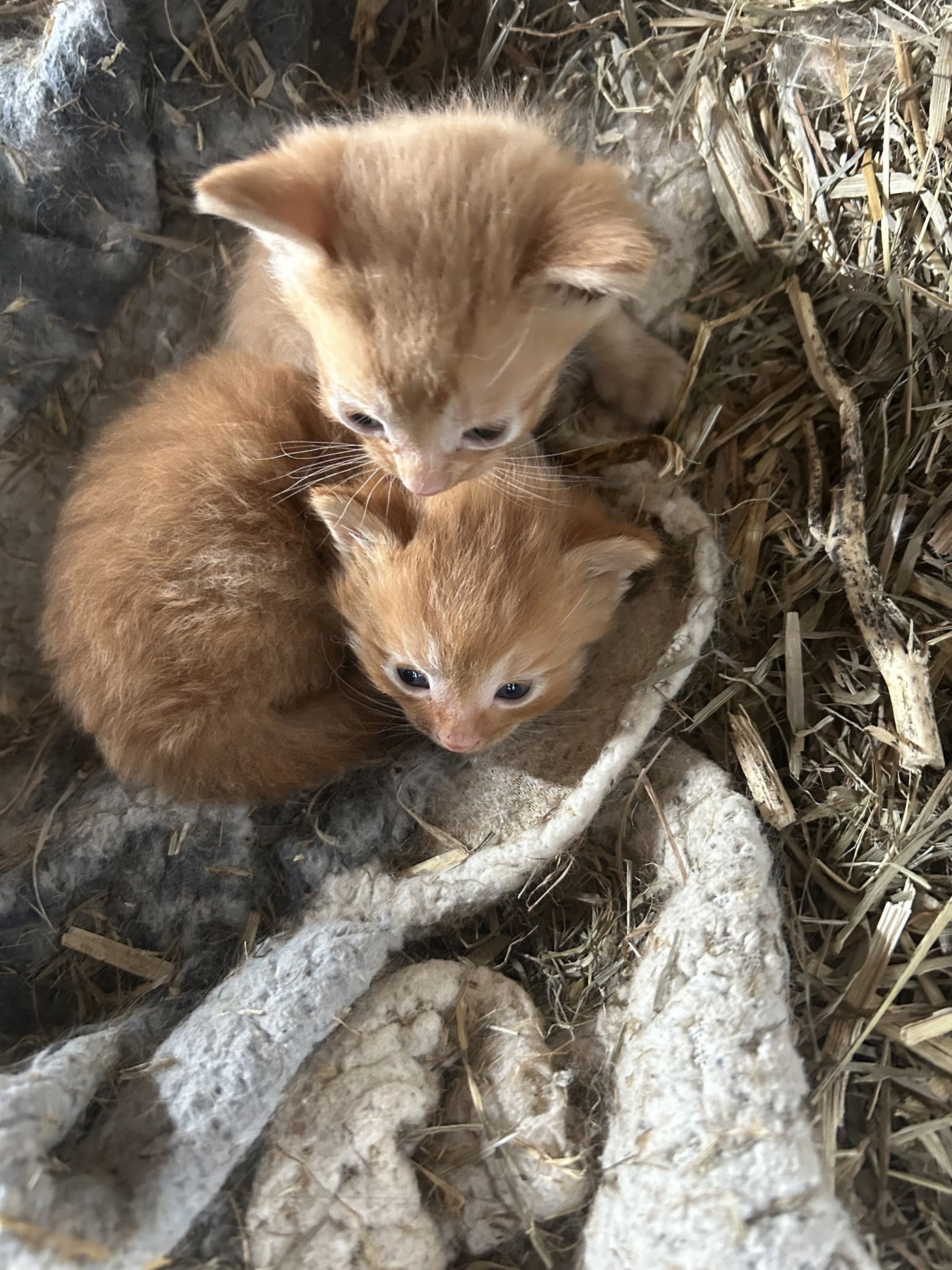
Lo and behold, one day I was astounded to hear mewing, which sounded suspiciously like kittens. Peeking under the blanket in the barn mow, I saw two beautiful yellow puff balls nestled there with eyes as wide as saucers and their mama — Fred! Who quite obviously was not a Fred but a Freda!
This old cat, whom I assumed was male, turned out to be the very best mama. I’d pick them up, their bellies round as pumpkins and eyes clear as crystal. Fred — that was what we’d named “him” and it stuck — had a patch of fur on her jawline gone, she was deaf and had barely any peripheral vision.
Her kitties were approximately 6 weeks old when we found their mama on the road that day. My first thought after seeing her there was of her twin orphan babies. How in the world would they survive?
That afternoon, I brought a saucer full of warm milk up to the barn. In tears I tried to show them the bowlful of milk. They would not drink; they were simply too little.
I called Sarah, weepily explaining what had happened.
It wasn’t one half hour later, and she and a helper were standing in the middle of my barn mow tenderly checking them out. Placing those babies in a blanket-lined carrier in the back seat of her car, she assured me in three or four months I’d have them back, fully weaned and neutered.
Confirming my perception of her compassion — and to calm me, I’m sure — later that night she texted: “The babies are fed and are sleeping!”
While I’m sorely missing Fred, I wait with anticipation when her offspring will again be home, thanks to sweet Sarah and her helpers at Joy’s Place Animal Rescue.
(“Your righteousness is like the highest mountains, Your justice like the great deep. You, Lord, preserve both people and animals.” Psalm 36:6, New International Version)
Kay Reminger was born and raised on a dairy farm, and she married her high school sweetheart, who happened to farm for a living in Leopolis. Writing for quite a few years, she remains focused on the blessings of living the ups and downs of rural life from a farm wife’s perspective.
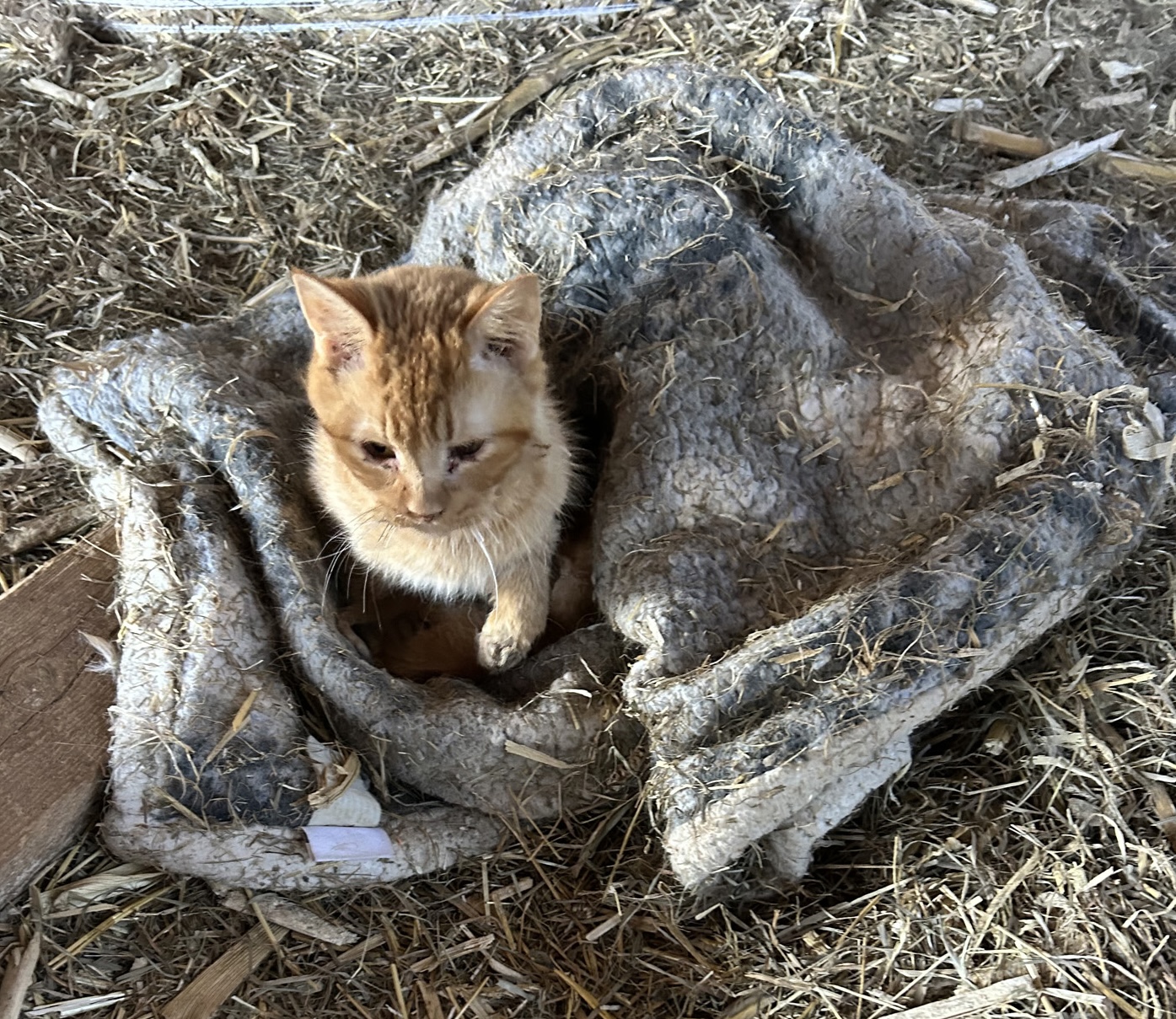
“Fred” recently gave birth to two kittens but was later found lifeless on the road in front of the Reminger farm. (Kay Reminger)


