
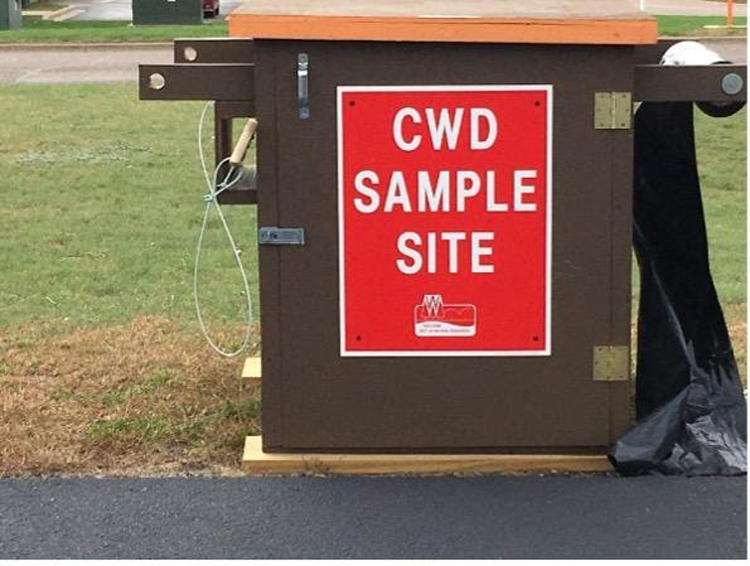
A deer harvested on the Menominee Reservation in 2024 tested positive for chronic wasting disease, and the Environmental Services Department is asking hunters to let it conduct CWD testing of their harvested white-tailed deer.
Environmental Services needs to remove two lymph nodes in the neck area of the white-tailed deer. They will send the lymph nodes into the National Wildlife Lab in Madison for testing.
On Nov. 25, 2024, an enrolled Menominee member harvested a buck deer and tested positive for CWD. The Menominee Tribe wants to be proactive and continue to test white-tailed deer for the CWD virus. Langlade, Oconto and Shawano all have CWD positives.
CWD testing will be available during office hours at the College of Menominee Nation Culture Building.
The tribe will place three CWD kiosks for deer head submittal. They will be placed in:
• Neopit, at the College of Menominee Nation building.
• Neopit, at the Menominee Tribal Enterprises building.
• South Branch Community Center (west side of building).
These freezers are for hunters to place their deer heads and fill out their paperwork. The ESD department will check daily.
CWD is a contagious, fatal neurological disease that affects the nervous system of deer, elk, moose and caribou. It belongs to the family of diseases known as transmissible spongiform encephalopathies or prion diseases. Prions are misshaped proteins that can spread the disease through direct animal-to-animal contact or in the environment through bodily substances or the carcass of infected deer.
Prions are extremely resilient and capable of remaining in the soil for years, potentially infecting several deer from a single source. Common signs of infected deer in the later stages of the disease are drastic weight loss, drooped head and ears, loss of coordination, excessive salivation and reduced fear of humans.
The Wisconsin Department of Health Services, the Centers for Disease Control and Prevention, and the World Health Organization all recommend against consuming meat from deer that tests positive for CWD.
Infected deer typically appear healthy for many months after contracting the disease, so DHS encourages testing for the disease regardless of the physical condition of the harvested deer, especially in areas prevalent with CWD.
To date, there have been no reported cases of CWD infection in humans.
Current tribal hunting regulations ban the baiting of deer on the reservation.
For questions, contact Don Reiter at 715-799-4938.


