
Students, staff and families came together Oct. 26 at Oconto Falls High School in support of mental wellness and suicide prevention with a screening for “My Ascension.” The feature-length documentary showcases how a 16-year-old cheerleader attempted suicide and was paralyzed in the attempt, but used her experience to bring hope to others.
Emma Benoit, of Dutchtown, Louisiana, partnered with Hope Squad, a school-based suicide prevention program, and became a national speaker in the hopes that her journey would help prevent teen deaths. The program operates at more than 1,600 locations around the world, including Oconto Falls.
After viewing the documentary, those in attendance listened to school and health experts from the area talk about some of the issues around wellness for teens and the potential reasons why some think suicide is an option.
Abby Huntley, clinic director for Innovative Services Inc., said the teenage brain from the age of 13 until almost 25 is set up where they experience emotion at a level 10 times more than any other time in their lives.
“So when you have the love of your life at 17 that you cannot live without, that is more intensely a love feeling than you will ever have with your future spouse that you’re with for 50 years, simply because of the way your brain chemistry is at that time,” Huntley said. “A lot of times, teens get the all-or-nothing thinking with ‘I hate my mom right now.’ That is the most accurate description for how intensely you are frustrated and upset with them at that moment. That’s OK.”
The teenage brain can also make them impulsive, Huntley said, noting that there is no such thing as a “pause button” on some reactions.
“That’s really one of the important things about developing a support system, so that you can come to somebody,” Huntley said. “When our young people come to us with really big, hard things, we have to meet them with validation and not judgment, and we have to put our fear aside in that moment and just sit with it. It’s not necessarily a time for big emotions and reactions or consequences. Natural consequences are going to come.”
Brianna Morrissey, social worker and homeless liaison for the Oconto Falls School District, said the exposures and pressures that teens experience should be taken into account as potential reasons why teens gravitate toward suicide when they can’t handle their lives.
“Any time our students are able to go online or have exposure to the online world, it automatically opens them up to this comparison,” Morrissey said. “When I work with students, especially in the middle school and high school age group, I find that students are comparing themselves to a highlight reel of someone else’s world. Oftentimes, they feel like, ‘Well, I’m never going to live up to that life that that person’s living. So what’s the point?’”
That thinking has created a new level of crisis among teens that wasn’t felt as much before the internet became a way of life, Morrissey said. It’s important for parents and other family members to notice changes in their teen’s behavior or routines, and once they see them, step in and ask, “Are you OK?”
“The biggest thing I tell parents when they’re talking, ‘How do I know? How do I know if this is happening?’” Morrissey said. “It’s not predictable in the way that it should be, but what is something that we can look at is whether there’s higher anxiety. Have we noticed an increase in agitation, or have we noticed people trying to isolate themselves? Do we notice if they’re spending more time in their rooms or if they’re not doing the things they wanted to do before?”
Sara Dick, program coordinator for Oconto County with the National Alliance for Mental Illness North Bay Wisconsin, recalled how she lived with anxiety and depression as a teen. Sometimes outgoing teens become quiet, she said, while teens who were more reserved tend to become more risk-takers.
“I remember really acting out, and I was very impulsive, more than other people,” Dick said. “When I look back at my warning signs, that was a major one. I was a quiet kid, and then all of a sudden, there was a big change. I was much more risky.”
Dick said she was nervous about how people would react to her as a teen, which is common among youths in that age group, with the fear someone would tell her what she’s feeling isn’t real. That’s why it’s important for parents to provide an open space for their children to discuss their feelings.
“I think Hope Squad is doing a phenomenal job with that, as well,” Dick said. “Making sure to ask, ‘Are you OK? I’ve noticed X, Y, Z. I’ve noticed you’re more isolating yourself.’ If you just asked me ‘Are you OK?’ I’d just say, ‘Yes.’”
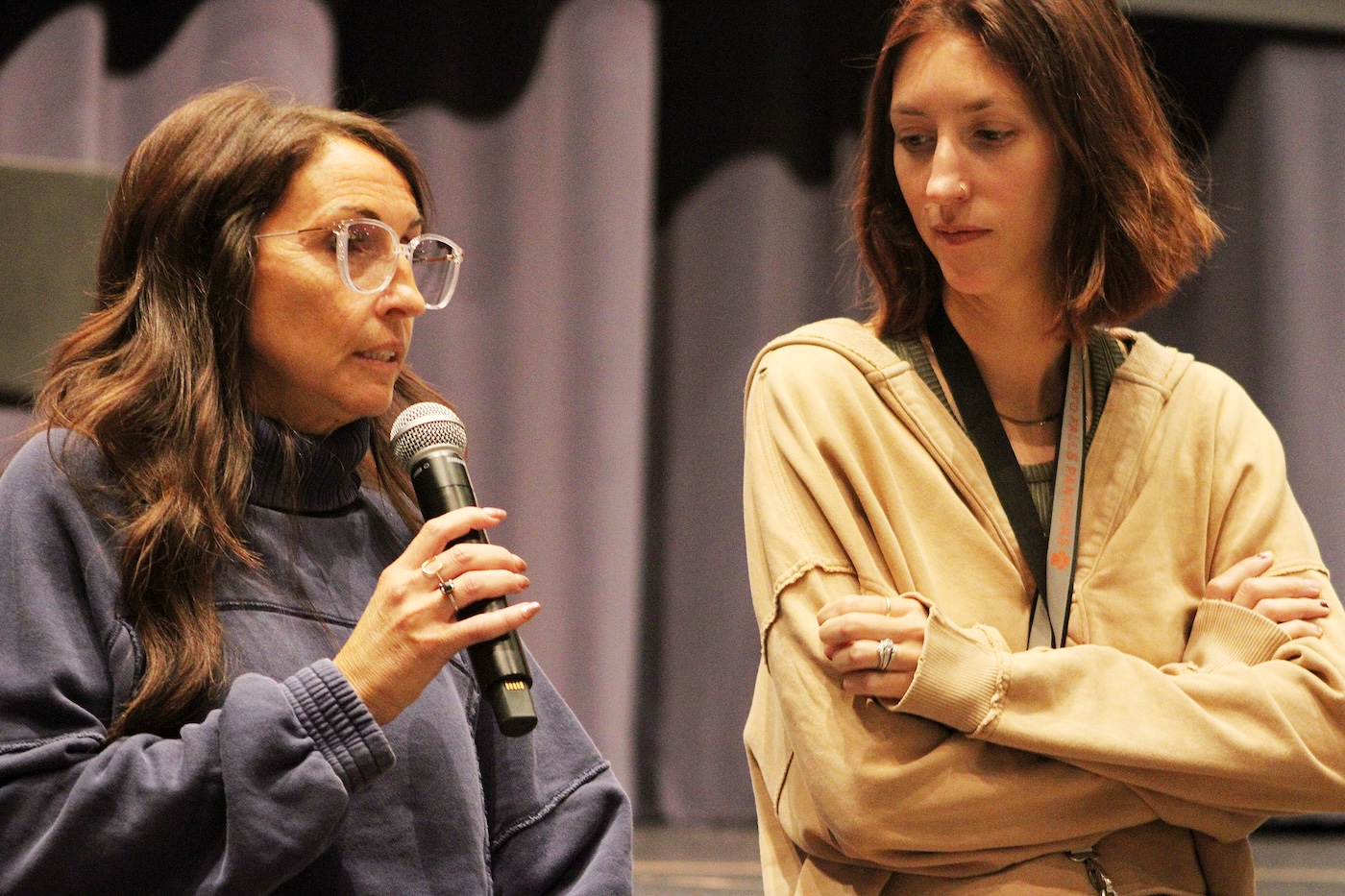
When doing a suicide screening, every one is different, according to Jamie Kuhn, Oconto Falls school resource officer.
“What we see a lot of times is resistance in terms of ‘I talked to so-and-so, and they had this experience,’” Kuhn said. “Everybody has different safety risks. Everybody has a different home environment. Everybody has a different group of support systems. So what you personally experience is going to be very different in terms of safety planning, in terms of law enforcement response, in terms of school response. So if you ever hear someone say, ‘I don’t want to speak up,’ that’s not a really good reason.”
Adults sometimes feel like they’re being judged, too, Kuhn said.
“What feels insurmountable to me is not going to feel insurmountable to somebody else,” she said. “Those are things you’ve got to think about when somebody’s in that moment in terms of encouraging them to get help, or listening to them and validating their statement.”
lpulaski@newmedia-wi.com

Jamie Kuhn, Oconto Falls school resource officer, talks about how people’s emotional experiences differ when it comes to feeling depressed or suicidal and how one person’s extreme experience does not solidify another person’s state of mind during a panel discussion Oct. 26 at Oconto Falls High School. (Lee Pulaski | NEW Media)


