
In the early 1970s, scientists were sounding warnings about climate change which seemed far-fetched. Out of curiosity, I attended an event featuring a man who’d become known as Earth Day senator; Wisconsin’s Gaylord Nelson.
I was starstruck. Sen. Nelson was congenial and charismatic, respectfully listening to comments and answering tough questions. I stayed for the meet-and-greet, a life-altering decision.
The next day I was tutoring a student after school when the librarian knocked on my classroom door. She said I had an important phone call. I panicked. Was there some kind of emergency?
Thankfully, no. It was Sen. Nelson’s aide. She asked if I would serve on a committee to find ways to introduce environmental studies at the high school level. Me? An English teacher? How could I say no?
The experience proved overwhelming and exciting. Clearly a blue gill swimming with walleyes, I gained confidence as we created a comprehensive curriculum. Early on, we decided to use trial lessons to see if ecology could be successfully incorporated into upper-level science classes.
In those days, Kaukauna High School was situated on the banks of a filthy and smelly Fox River. Consequently, KHS was chosen to preview a unit on freshwater pollution. I vividly recall the day almost 100 juniors and seniors filed into the multi-purpose room to view a film envisioned as a kick-off attention grabber.
Most of these kids were in my English classes. Many were from rural areas and loved the outdoors. I’d graded hundreds of compositions about fishing and swimming adventures. I especially enjoyed those that described idyllic visits “up north” at Grandma and Grandpa’s cottage. (Smile. Jon and I are now in this much-loved group.)
The focus of the film was Lake Erie, a “do not eat the fish” lake. Students reacted with shock and horror at the grainy moving pictures shown on a reel-to-reel movie projector. There was a collective gasp as images of Lake Erie on fire flashed across the screen. It was so polluted that the water was burning.
Outside of school, I brought up the topic in social settings. The response was usually some version of, “Why should I care? Even if global warming is dangerous, I’ll be dead before anything really bad happens.”
Well, I cared, and so did my students. When you live close to the land, you become attuned to the rhythms of nature. Growing up on a dairy farm and then living on rural property, you cherish pastoral views of lush green alfalfa and golden cornfields. You marvel at the beauty of a winter terrain peacefully asleep under a waist-deep blanket of pure white snow.
In 1992, I read “Earth in the Balance” by Al Gore. By then, I was living on the mostly undeveloped southeast side of Appleton. Not exactly country, but close enough. The next year we bought property in Townsend, another life-changing decision that has taken us even closer to nature.
When you live full-time in the woods, you learn that human beings are not at the top of the food chain. I always carry bear spray and a whistle if I’m going out for a walk. I blow it often so the big critters know I’m around. The piercing sound attracts my pet deer, but it must repel bears because I haven’t seen one up close and personal yet. Thank goodness.
Question: Have we created a world for a climate that no longer exists? The past decade, and especially this summer, indicate that if we’ve been waiting for climate change to smack us in the face, it already has.
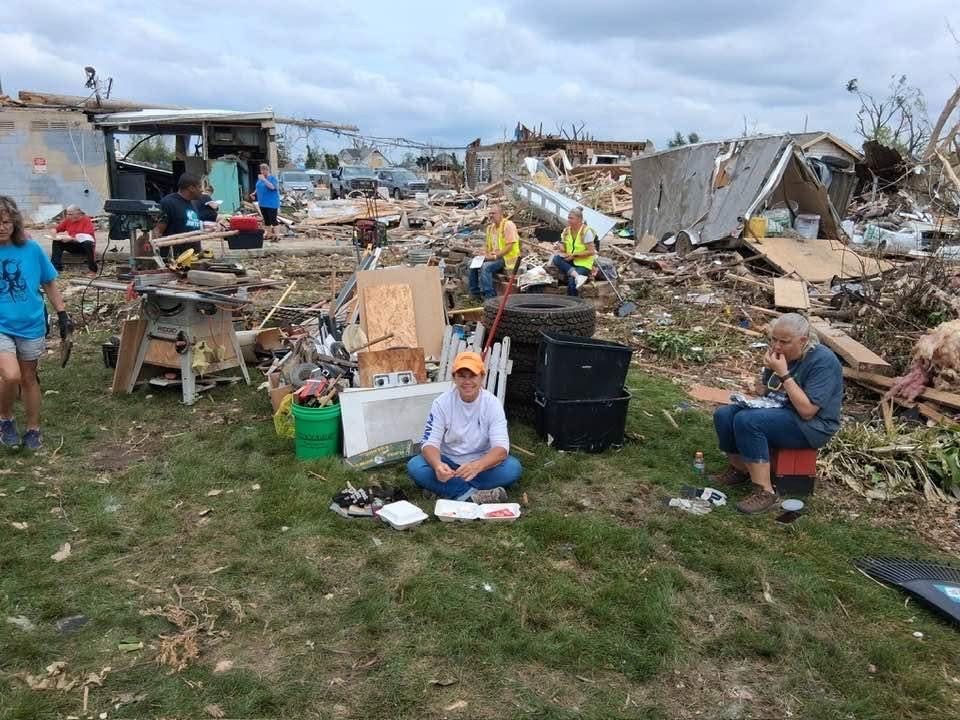
Consider what happened at the end of July when an EF-3 tornado hit Menasha. The storm badly damaged Jon’s former place of employment, the Menasha water plant. It did extensive damage to Gegan School, where my mother once taught. It ravaged the block where my bonus kids grew up.
Yes, there have always been bad weather events. But just in the past six months, we have seen storms, tornadoes, drought, heat waves, flash floods, raging wildfires, earthquakes, and toxic smoke plumes all piled on top of one another. We can debate the cause, but this is what global warming looks like.
Jon and I are trying. Determined to leave a small carbon footprint, everything we own is energy efficient. We use the gas-guzzling pickup sparingly, opting instead for my hybrid Escape. We reuse, repurpose, recycle.
Last summer, we installed solar panels. Scoffers said we were stupid. We’d never live to recoup our investment. Really? Our WPS electric bill this past year was $228, the mandatory monthly facilities charge. We anticipate an eight-year payback, and that’s at today’s prices. Really.
Best of all, the system has a 25-year warranty so future owners will also enjoy clean, inexpensive energy. Now that thought gives me a sunny disposition.
Kathleen Marsh is a lifelong educator, writer and community advocate. She has published eight books, four on the history of Townsend, where she and husband Jon are happily retired on the beautiful Townsend Flowage.


