
This time of year carries a different meaning for each of us. For some, it is a reminder of oppression and colonialism; for others, a reminder of thankfulness and family; for others still, a reminder of duty to community.
It can also be a season of comparison, when we notice whose table is fuller and whose year went better. Whatever your view of the holiday, it comes into our lives every year. It might be a family gathering or a ceremonial practice, a protest against colonialism, a family hunt or simply a day to earn time and a half.
For many, gratitude is a continual practice, a conscious effort to recognize everything that accompanies us through life. Even in experiences that feel negative at the time, there is something to learn and be grateful for.
Gratefulness looks different for each of us. It is easy to measure our lives against what someone else has. But the person with every tangible asset can be the most unhappy person in the room, and the person with very little can be the most content. What we have does not decide it. Gratefulness is a practice, and it does not come naturally to everyone.
I am reminded of a classmate of mine. Over the semester, we have had many conversations. He served his country, built a career, raised a family and then went back to school, where he remains, a man devoted to a life of learning. Woven through those same stories are loss, hard years and times when he had very little. Anyone with a life like his would have every reason to shut down, and it would be understandable if he met the world with bitterness. He doesn’t.
Between the words of his stories comes gratefulness. He chooses to see those experiences not as a detriment but as a chance to grow.
For me, gratefulness is a lens, a way of seeing whatever we are given and deciding what to make of it. When I think about it, I default to the original language that echoed across these lands: oma͞ēqnomenēweqnaesen, the Menominee language. It is our breath of life, our way of being, and our way of knowing.
Wa͞ēwa͞ēnehtakosew means “he is grateful.” The first part of the word is our word for thanks; the second half speaks to a way of being. So for me, gratefulness is both a lens and a practice toward a way of being.
This year, that way of being has a great deal to rest on.
I give thanks for my wife and my daughters and for the new family I now have. They have made my life fuller than I knew to ask for, and they are the first reason I wake up grateful.
I give thanks for our ancestors. They held on to our land, our culture and our language through times that were meant to take all three away, and because they did, we are able to carry them forward today. When I walk our forest or hear our language spoken, I am seeing and hearing what they protected. None of what we have was guaranteed. It was kept for us, and it is ours to keep for those who come next.
I give thanks for our language and the teachings it holds. A word like wa͞ēwa͞ēnehtakosew is more than vocabulary. It is an instruction on how to live. I am thankful for everyone, past and present, who has been part of the revitalization movement: the elders who kept speaking, the teachers who kept teaching and the learners who kept showing up.
I am thankful that I was born a Menominee. Everything else I have named grows from that: the land I come from, the language I return to and the people I belong to.
Making gratefulness a foundation of life is necessary to being happy. It is how I quiet the green-eyed monster that lives in all of us: the habit of counting what others have instead of what we’ve been given. So each day I make the effort to wake up grateful. In each not-so-positive lesson there is a chance to learn, and I am grateful for that chance. Wa͞ēwa͞ēnehtakosew means that I am grateful, and it is something that I am learning to live up to.
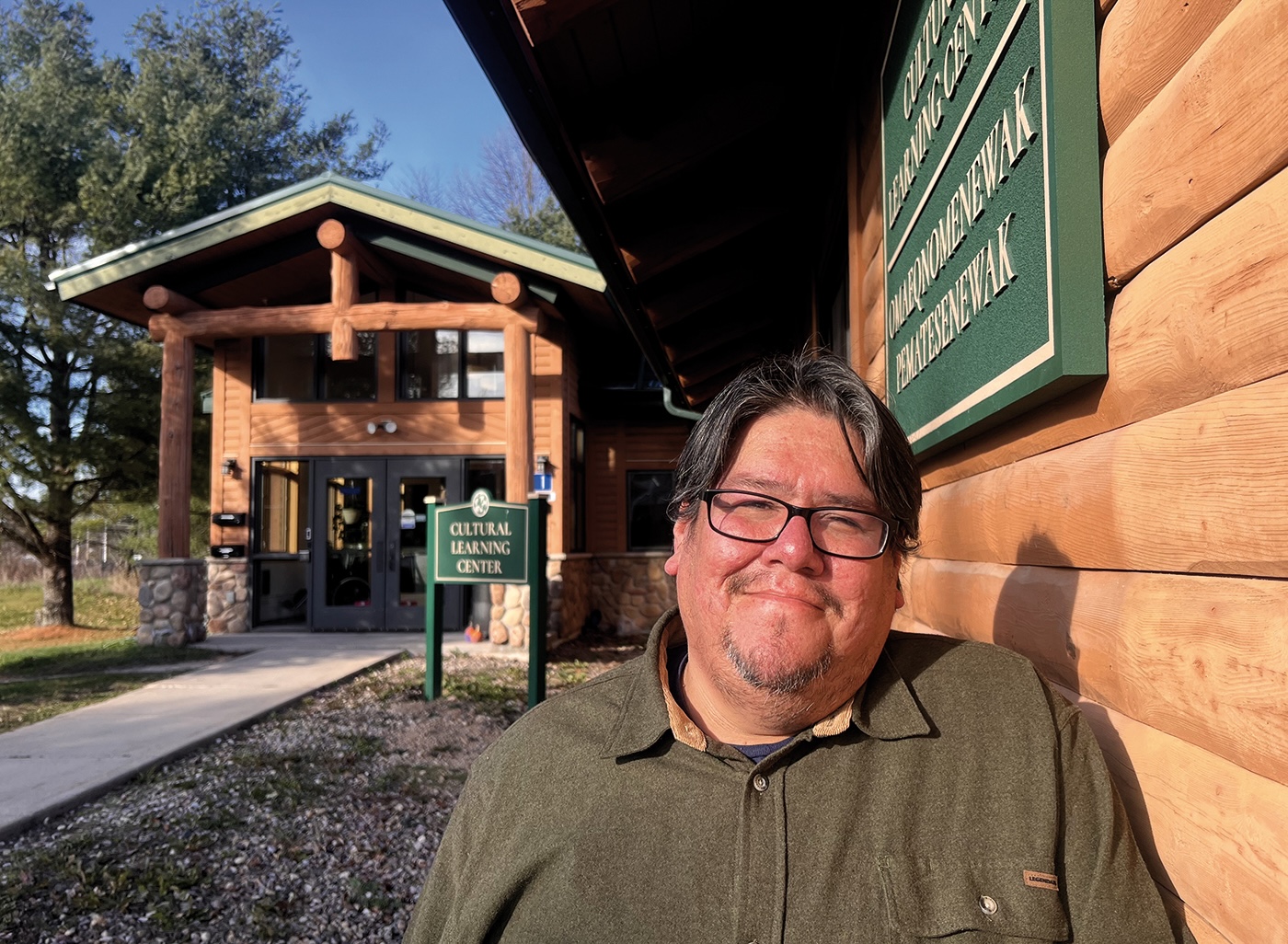
Richard Oshkeshequoam Jr. is the registrar at the College of Menominee Nation.


