KESHENA — The Menominee Indian Tribe of Wisconsin is planning to turn one of its natural jewels, Keshena Falls, into a park for reservation residents to enjoy and for visitors to learn more about the Menominee culture.
The tribe held a community input meeting Wednesday night to see what residents wanted to see in the Keshena Falls Park, from the design of a pavilion to what uses they want for the park. The tribe and Seven Generations Architecture and Engineering, based in Michigan, presented some of the current ideas but emphasized the final park would be designed according to the people’s wishes.
Keshena Falls is located in the area where state highways 47-55 split where Highway 47 crosses the Wolf River.
“I would like to emphasize that this is all conceptual,” said Jeremy Pyatskowit, the tribe’s environmental department director. “This is a baseline, general idea of where we’re starting at.”
Any design would need to be minimally invasive to the current environment. Alex Hokkanen, project coordinator with Seven Generations, noted that there is a wild rice habitat near the falls.
Four big factors in the proposed park will be a pavilion, where storytelling and other events can take place; walking trails; a boardwalk where visitors can view the falls and the other natural scenery from new and different perspectives; and restroom facilities.
There would be several parking areas, and plans are in the works to remove the existing dam and powerhouse, both of which have not been used for years. There would be some other water control measure put in place.
The design would include easy accessibility for anyone, even people with limited mobility, Hokkanen said.
One proposal for the park is an overlook where community members can witness the release of sturgeon into the river in the spring and fall. Currently, most community members observe the releases from the side of the road next to Chickney Creek.
“The sturgeon release is a bi-annual event, and we wanted to highlight that,” Hokkanen said. “That would be put in place just across the river from the pavilion. Hopefully, that area will be a boardwalk where people can observe the release from.”
There are also plans for an overlook at the falls, giving people a chance to see them from a different angle, according to Hokkanen.
The proposed park would also include markers that portray the Menominee’s five brother clans — wolf, bear, eagle, crane and moose.
“Community reflection in our design is very important,” Hokkanen said. “We started investigating the (Menominee) origin story and the associated clans and felt that representing them on the path would be advantageous here. How they’re going to be represented is something we hope to get feedback on.”
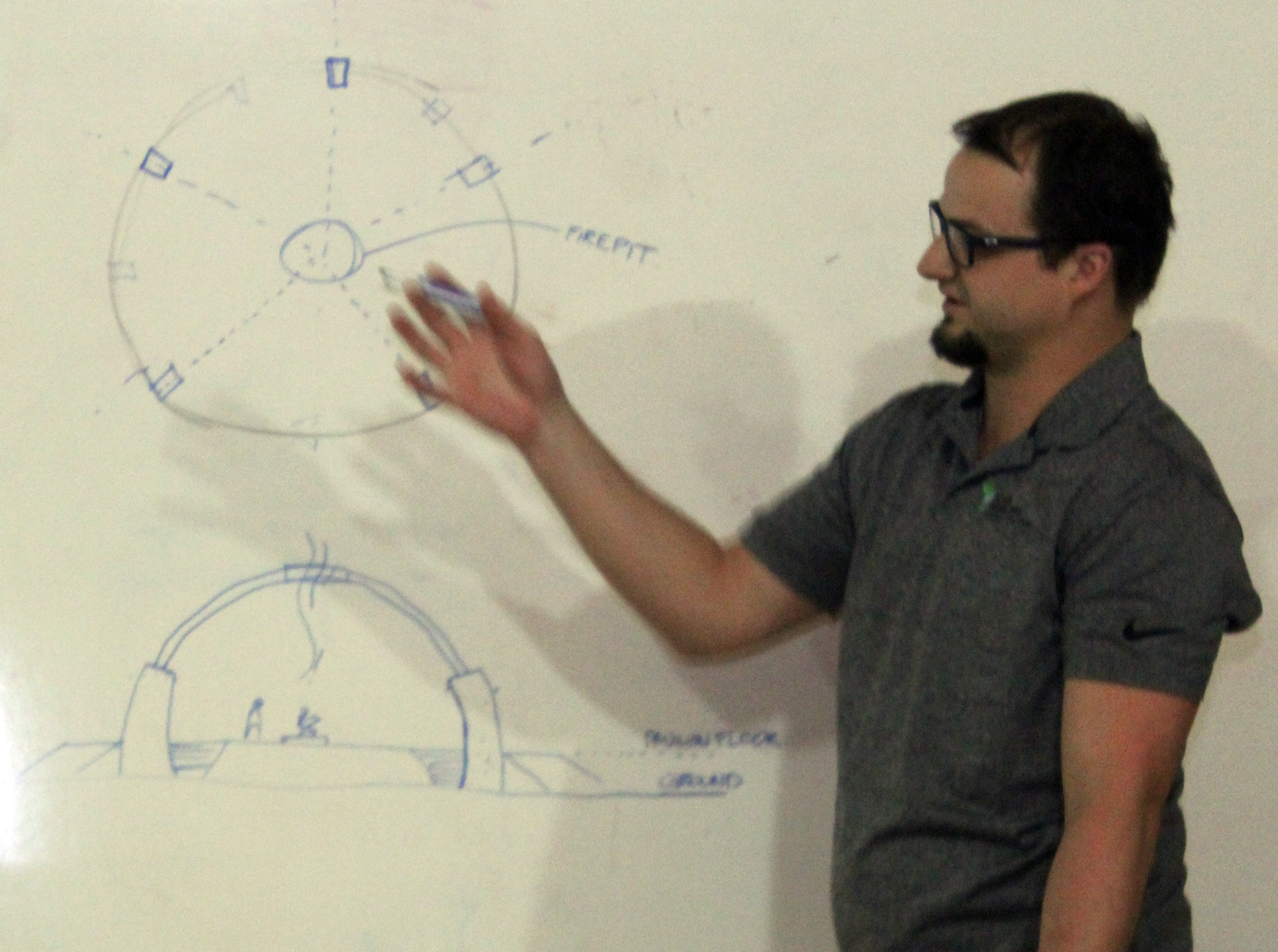
Scott Randall, a senior designer with Seven Generations, said the park, especially the pavilion, would be key to telling about the Menominee, their origin story and the significance of the five clans. The proposed pavilion would be set up on the northeast corner of the park with five access points, one representing each clan, and a fire pit at the center.
“That’s one of the more open spaces, so what we wanted to do was really make that a focal point, a spot for the head of the trail and experience,” Randall said. “With that, we wanted to incorporate all five of the brother clans as a symbol of coming together, something that keeps the unity of everything.”
There is the possibility of an eagle canopy walk in the second phase of the project, located at the south end of the park near State Highway 47-55 adjacent to the existing Menominee Cultural Museum, according to Hokkanen.
“We envision that this will be an experience where you leave the ground and walk through the trees out to the river, and then it will bring you back,” he said.
A river boardwalk is also on the list of possibilities, Hokkanen said.
Seven Generations is also looking to get input on how to make the park a year-round facility. Hokkanen noted that he is from Minnesota, and he knows that snow on the ground tends to keep people away from some parks.
Designing for Keshena Falls Park is expected to continue through the summer, and Pyatskowit anticipates work would begin in spring 2021. A budget will not be set until the design is complete, he said.
“(Keshena Falls) is a historically significant area for our tribe,” Pyatskowit said. “Culturally and historically, it was one of the main spawning areas for sturgeon; Keshena Falls was as far as they got. We have a place that a lot of people were visiting, but it wasn’t developed in any shape or form.”
lpulaski@newmedia-wi.com
Tribe planning park at Keshena Falls