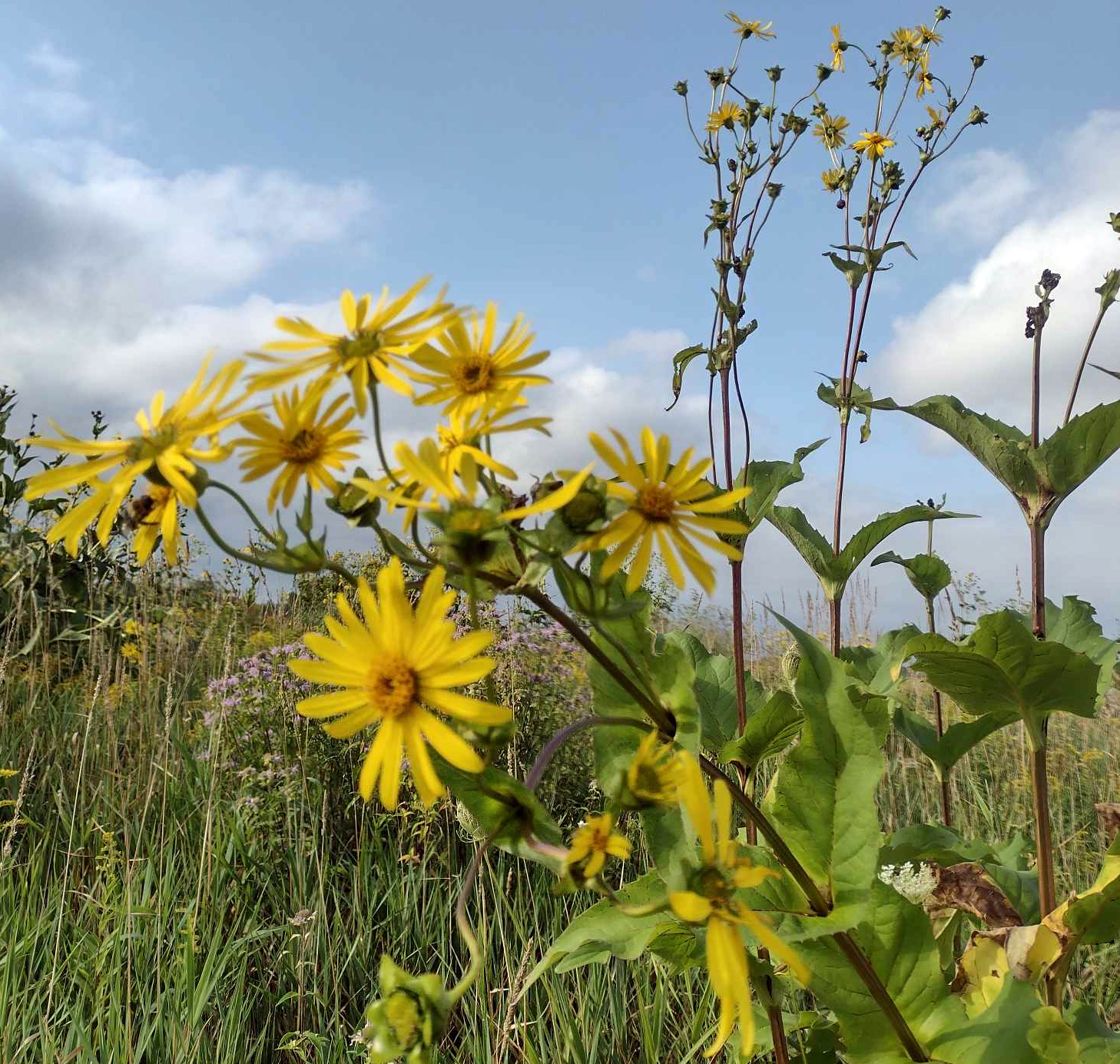
Posoh. There are a few names that people call me. Sunroot, earth apple, sunchoke and Jerusalem artichoke are some. I’m around in the summer but ready to harvest when it gets chilly.
Some people mistake me for just a regular sunflower, but I’m usually much taller. I live all over in prairie fields. If you pass a field on your way to work or school, I’m there.
It’s my roots or tubers that are most enjoyable to eat. I can be pickled, sauteed, added to salads or roasted — just some of the many ways to prepare me. I taste similar to a water chestnut.
I’m helpful to your gut health. I’m good for blood sugar balance, good for reducing cholesterol, and I’m known to help protect against some cancers. All these good things are probably why Indigenous tribes have been harvesting me for hundreds of years or longer.
When you find these sunchoke flowers, you have to carefully dig them to get to the tubers. If you harvest them a bit early, they can be tough to work with. Once it gets cold out is best. Fall or early spring works. They are very similar to a water chestnut or maybe even a potato. You can substitute them for potatoes in a variety of dishes. Try making a sunchoke mash.
The reason we chose this recipe for this month’s Indigenous food column is because they’re all around us. This will add just another versatile ingredient to everyone’s list of what to cook at home, which brings me to a question I get asked a lot: What do chefs eat at home? What do we prepare for our meals? Well, whatever is in season would be my response to that question.
I call these ingredients the kitchen sink because I use them to build the rest of my meal or plate. What’s in season? What looks good? OK, let’s build around that. That is exactly how a chef shops or thinks of today’s special, whether it be a fine dining restaurant or simply meal planning at home for the family.
In my first column, we touched on taking Indigenous ingredients and using them in our everyday meals. Make them a comfort food. Sunchokes are another great example of just that.
Have I mentioned also how easy they are to grow? Going out and harvesting is one of my favorite family things to do, but you can also just grow sunchokes at home. For people who are intimidated by growing plants, these are pretty hardy. From the exact words from the Stone Pier Press, a food and environment publishing company, they are basically drought resistant.
Thanks again for reading this month’s Indigenous food column. We will try to continue these throughout the seasons. Fall is coming up, and we look forward to discussing our next ingredient, recipe or technique.
SAUTEED SUNCHOKES WITH GARLIC
• ½ pound of sunchoke roots, washed and scrubbed clean
• 2 tablespoons of sunflower oil
• 4 garlic cloves, minced
• Sea salt to taste
• Cracked black pepper to taste
• 1 tablespoon of fresh lemon juice
Cut your sunchokes to a medium dice, ½ inch thick. Heat your sauté pan to medium high, add your oil. Sauté the sunchokes for about 4-5 minutes. Then add your garlic. Sauté another couple minutes. Season with salt and pepper and finish with the lemon juice. Serve, enjoy.
Chef Francisco Alegria is from the Menominee Reservation and has Indigenous roots from Mexico. He is a Teppanyaki master who owns an Indigenous/Asian fusion catering business and serves as a nutritional educator for the Menominee tribe.
Sunchokes tasty, good for your health