You have a straight-shooting rifle with a dialed-in scope, plenty of ammo, a backpack full of gear and lunch, and plenty of sleds, ropes and carts to haul out the biggest buck. Now if you only had a place to hunt.
Because you hunt in Wisconsin, you’re in luck. You have more than 7 million acres of public hunting land available to you, including some you’ve heard of and some you probably haven’t.
Start off with around 6 million acres of state-owned land, including some areas in state parks. Although many of these acreages do get some hunting pressure during opening weekend, you’d be surprised how seldom used some are during other times. I’ve taken many deer and a few turkeys off one small Waupaca County state-owned property, and have hunted there alone many days.
The Wisconsin Department of Natural Resources has this handy mapping tool to help you find deer hunting properties in your area: https://dnr.wisconsin.gov/topic/fl/RealEstate/PALApplication.
There is a learning curve to using the PAL application. At the bottom of the initial webpage, you will notice guidance options for desktop and mobile usage. I recommend printing out the guidance page for help with navigation. So far I think it’s not especially user-friendly.
There’s more than one way to fry a public-hunted deer tenderloin. Here’s another source of DNR-managed lands that might be easier for you to use: https://data-wi-dnr.opendata.arcgis.com/datasets/wi-dnr::dnr-managed-land-parcels/about.
Here’s the easiest way to find and learn more about state public lands, listed county by county. Just go to the DNR website, and type in “public lands” in the search box. On your browser, it looks like this: https://dnr.wisconsin.gov/topic/lands.
State lands fall into one of five categories: parks (50), forests (15), natural areas (687), wildlife areas (265) and fisheries areas (38). We’ll skip the last one for another day. In keeping with the state’s general guidelines on public use, some of the first four categories may be open to hunting. Check with the individual site’s rules for details. State parks generally require an entrance fee, either by paying a daily fee or using an annual state parks (included with a Patron Hunting License and also available at any state park).
One of the crown jewels for public deer hunting in Waupaca and Shawano counties is the Navarino State Wildlife Area, more than 15,000 acres of marsh, uplands and woods. Be sure you are hunting in the county listed on your antlerless deer license. Buck licenses are good statewide on public and private land.
I was lucky enough to shoot a fat doe here many years ago, after another hunter I never met shot a small buck. He appeared after my shot and said, “You shot a doe, didn’t you?” We dragged our deer out together and even used his truck to take both our deer to a Shiocton check station. Remember those?
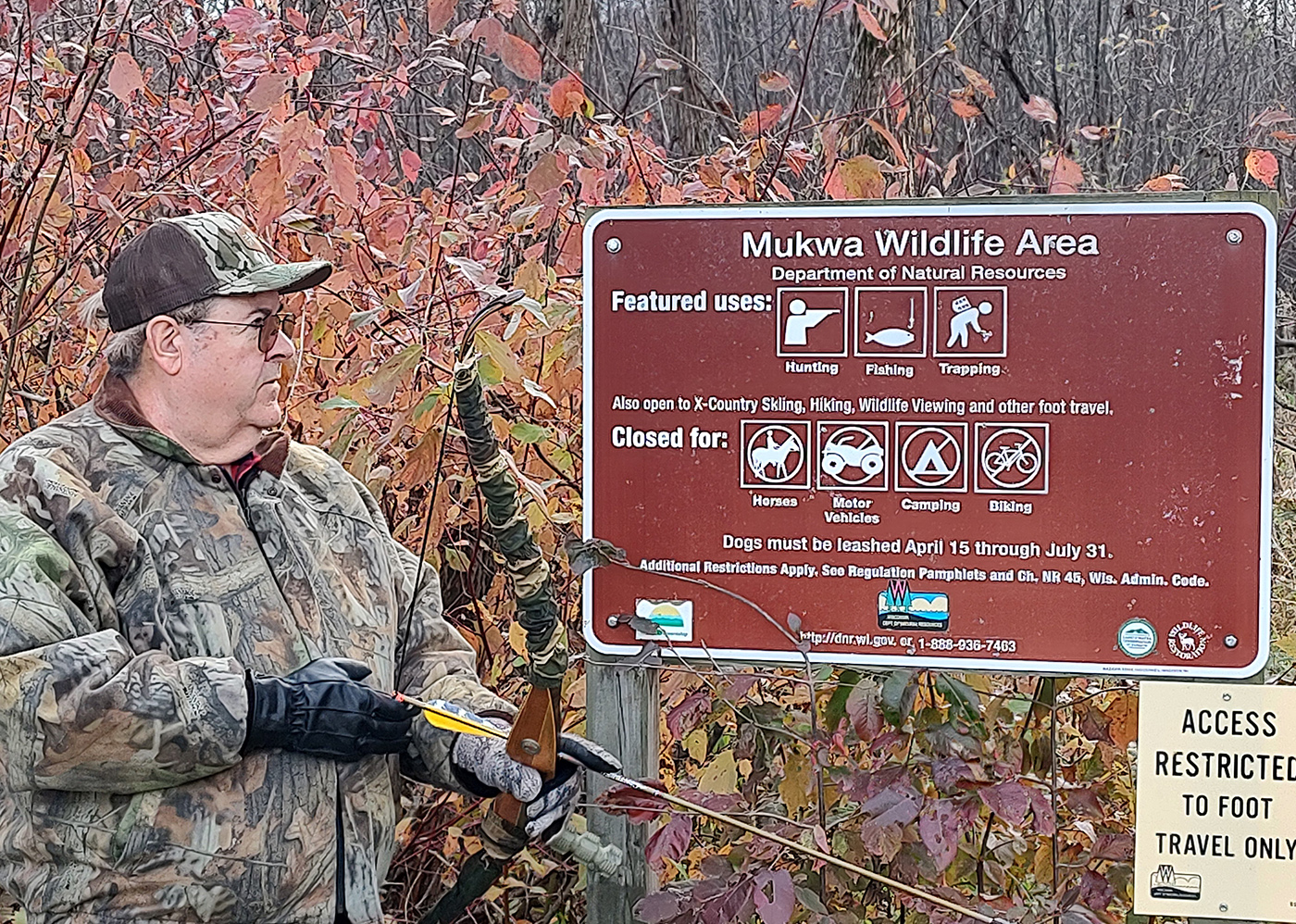
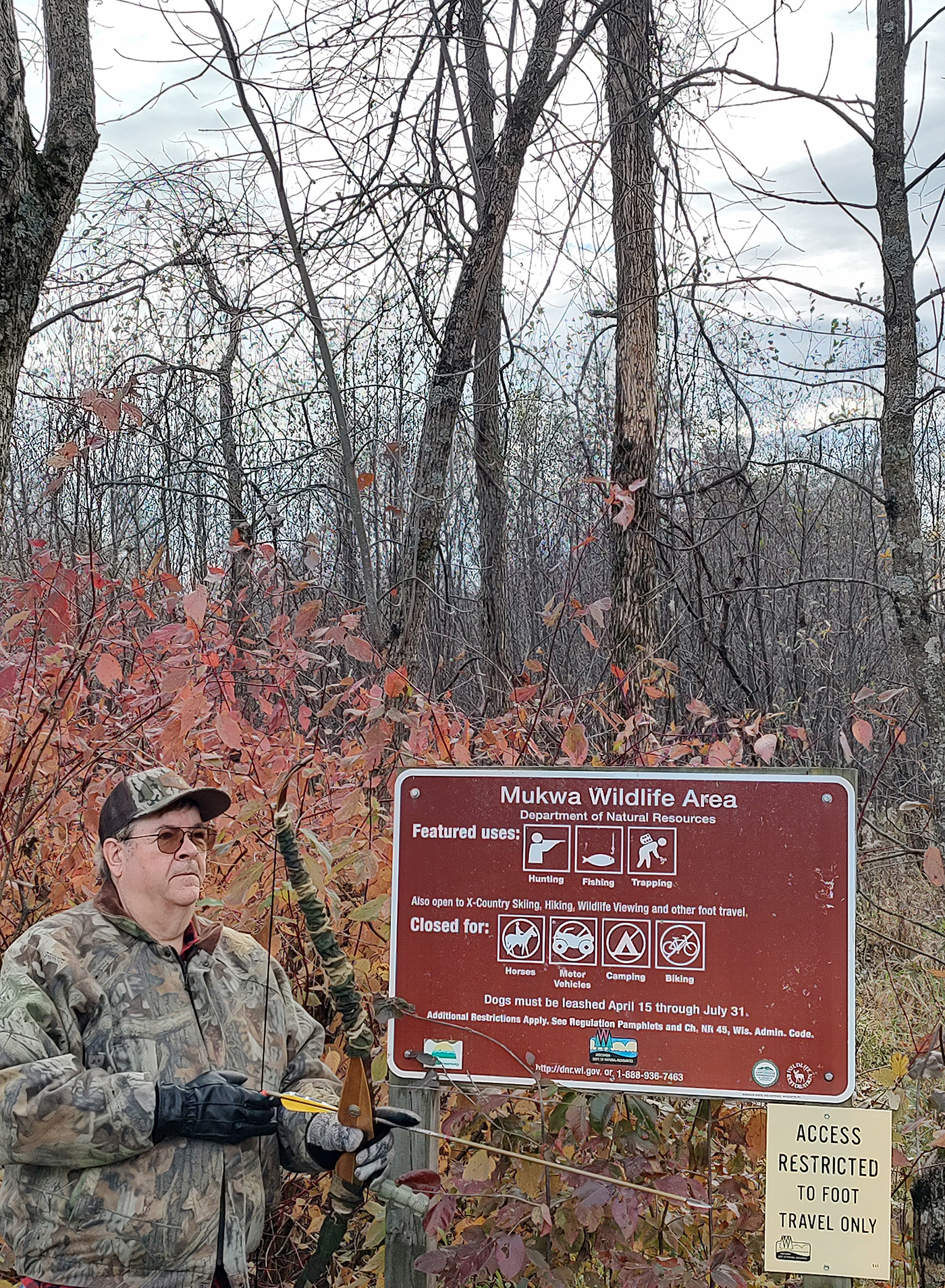
One of my personal favorites, found a mile west of New London on County Road X, is the Mukwa State Wildlife Area. This 1,290-acre site bordering the Wolf River includes hardwoods and marsh, offering deer, waterfowl, small game and stocked pheasant hunting.
When I moved to Wisconsin in 2000, I scouted this mosquito-infected swamp, because I had few options (or so I thought). A few days later, I shot my first Wisconsin deer, a button buck, with my compound bow. I then got turned around in the dark after field dressing it and couldn’t figure out the way back to the parking lot on a moonless night. I patiently waited for the search posse to show up.
My wife showed up about 10 p.m., alone, and honked her car horn a few times to give me the direction I needed.
There are privately-owned lands open to the public through programs called Voluntary Public Access (VPA) and Habitat Incentive Program. Landowners enrolled in this program receive financial incentives to allow hunting, fishing, trapping and wildlife observation on their properties, and apply for grants to create or improve wildlife habitat. Learn more here: https://dnr.wisconsin.gov/topic/Lands/VPA.
Two types of privately owned lands that are generally open to hunting are Managed Forest Lands (MFL) and Forest Crop Law (FCL) Lands. Landowners get certain tax breaks for allowing the state to manage their forests, but in most cases must allow public access (with exceptions).
Large tracts of land owned by paper companies often fall in these categories.
Although designed to help bird hunters, the Fields and Forests Interactive Gamebird Hunting Tool can also be used to find public hunting lands that may be open to deer hunting, too. It primarily shows stocked pheasant hunting fields as well as young aspen and lowland alder cover favored by ruffed grouse and woodcock. Here is the link: https://dnr.wisconsin.gov/topic/Lands/FFLIGHT.
The Chequamegon-Nicolet National Forest is 1.5 million acres of public access lands spanning 11 northern counties. Learn more here: https://www.fs.usda.gov/r09/chequamegon-nicolet.
Here’s the sleeper you might have overlooked: county forests. According to the DNR, these are the state’s largest landholding, totaling 2.4 million acres. Managed by 30 separate counties, they generate up to $50 million in timber revenue and create $4.6 billion in forest products, but they also offer hunting, snowmobiling, ATV riding and more (https://dnr.wisconsin.gov/topic/CountyForests).
Apps like onX Hunt, HuntStand, HuntWise, Gohunt and others make it easier for hunters to see the boundaries and names of public and private lands. The onX Hunt app seems to be the most robust, but also one of the most expensive at about $100 a year. Many also can be purchased for just a few months.
Some of us prefer old-school paper, no batteries needed. Two great sources for public hunting areas are the county plat books (available at your county’s courthouse) and the Northern Wisconsin All-Outdoors Atlas and Field Guide (currently on clearance for $13.50 at Fleet Farm stores). The latter is a ring-bound book with laminated covers for field or vehicle use, featuring public and private land boundaries, detailed trout stream maps, plus comprehensive road and trail information.
It should be clear at this point that we are truly blessed with ample places to hunt deer. If you are willing to get off the beaten path and get there earlier than the other hunters, you will be rewarded with many happy memories and maybe even some venison.
Ross Bielema is a freelance writer from New London and owner of Wolf River Concealed Carry LLC. Contact him at Ross@wolfriverccw.com.