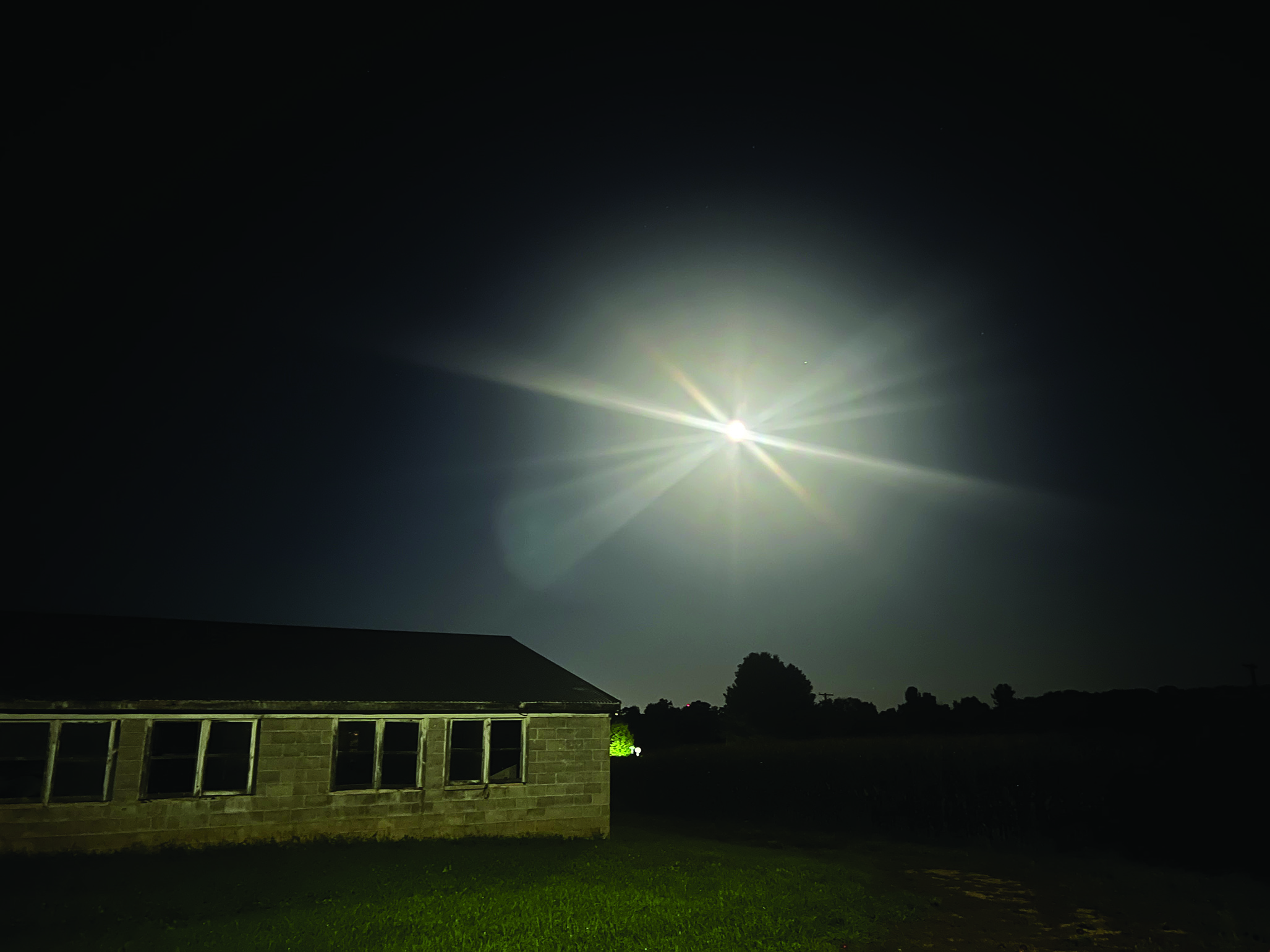
A super blue moon captured the attention of millions Aug. 30-31.
A blue moon is the term for when there are two full moons in a single month, according to NASA. The moon’s cycle is 29.5 days, a bit shorter than the average length of a calendar month. Eventually that gap results in a full moon happening at the beginning of a month with enough days still remaining for another full cycle. This happens every two to three years.
The moon travels around the planet in an elliptical orbit, or an elongated circle, with Earth closer to one side of the ellipse.
Each month, the moon passes through the point closest to Earth (perigee) and the point farthest from Earth (apogee). When the moon is at or near its closest point to Earth at the same time as it is full, it is called a “supermoon.” Because the full moon is closer to Earth than usual, it appears larger and brighter.
The term “supermoon” is used to describe a full moon that occurs within a day or so of perigee, so they happen three to four times a year. About 25% of all full moons are supermoons, but only 3% of full moons are blue moons.
The time between super blue moons is quite irregular ― it can be as much as 20 years ― but in general, 10 years is the average.
The next super blue moons will occur in a pair, in January and March 2037.
Super blue moon lights up the night sky