
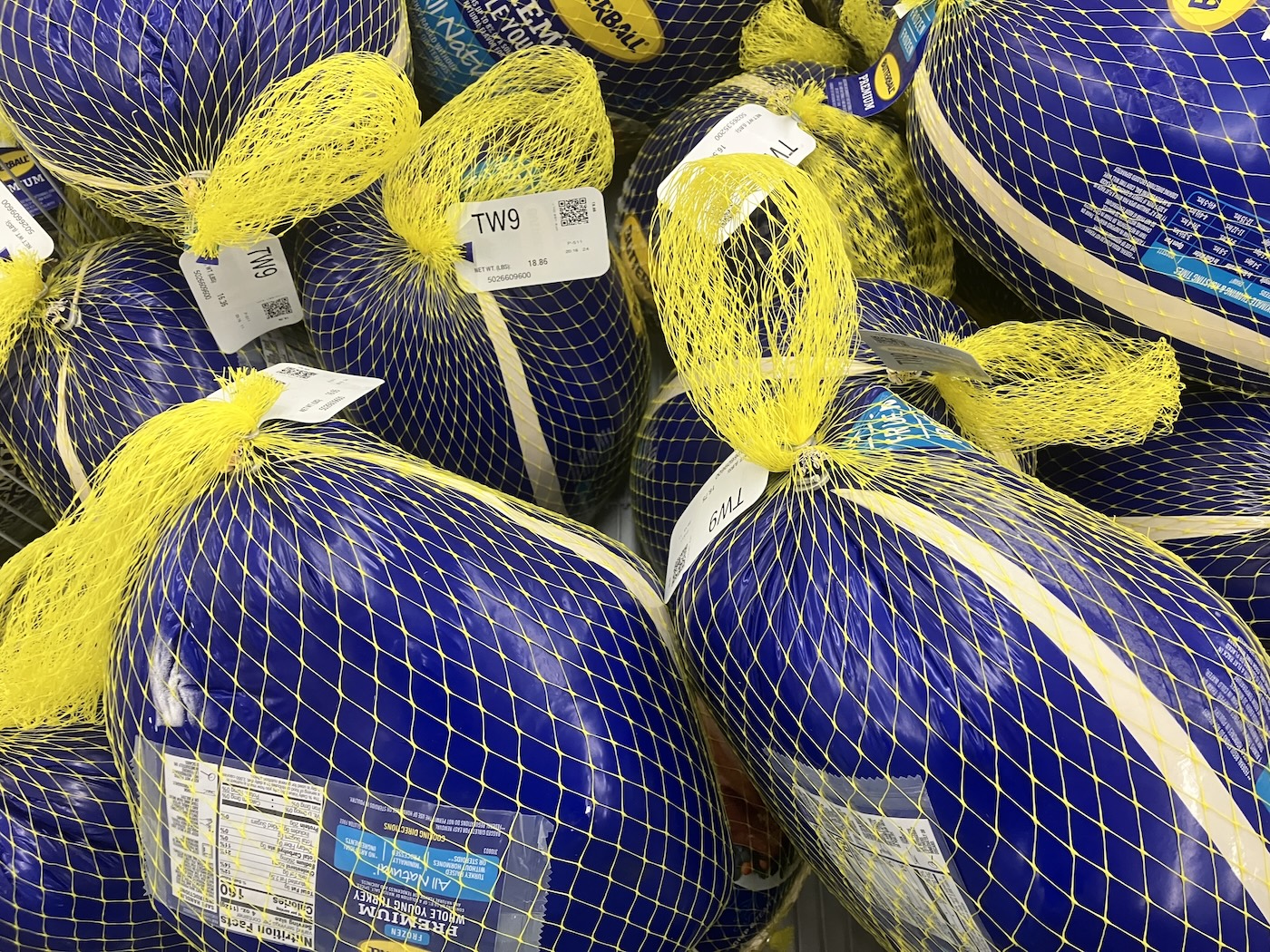
It’s time to celebrate Thanksgiving, but prices are going up for the big day, and it’s important for those preparing the meals to be careful when doing so.
The price of a traditional Thanksgiving meal in Wisconsin is up 2.96%, according to Wisconsin Farm Bureau’s annual Marketbasket survey that rang in at $63.67, an increase of $1.83 from the 2025 survey of the same items.
The Marketbasket survey looks at the price of popular food items used to prepare a Thanksgiving meal sufficient to serve 10 people. This survey allows for Wisconsin food prices to be compared with food prices from across the country. Comparatively, the American Farm Bureau Federation’s survey of the same items showed a 6% increase from 2025 prices at a total of $58.63.
“Families are watching every dollar this Thanksgiving and so are the farmers who help put that meal on the table,” said Cassie Sonnentag, WFBF senior public relations director. “Farmers receive less than 6 cents of every food dollar while facing rising production costs. By shopping holiday specials and choosing Wisconsin-grown products when possible, consumers can stretch their budgets while supporting local farm families behind their holiday traditions.”
Wisconsin’s Thanksgiving Marketbasket survey is an informal, annual review of food price trends in relation to changing farm prices, weather and wholesale and retail food marketing. Wisconsin Farm Bureau members collected price samples of 15 Thanksgiving food items in early November.
Farm Bureau volunteer shoppers were asked to look for the best prices, without taking advantage of special promotional coupons or purchase deals.
Several factors are contributing to higher grocery prices this Thanksgiving, including increased fuel and transportation costs that impact the food supply chain.
“The price tag at checkout doesn’t tell the whole story,” said Sonnentag. “Farmers face many of the same financial pressures as consumers, from higher production costs to transportation expenses.”
Turkey prices in Wisconsin rose $1.12 compared to last year’s survey. While the U.S. turkey industry is showing signs of recovery, turkey growers continue to face challenges from animal disease and higher feed costs.
These pressures extend beyond the Thanksgiving table, with the U.S. Department of Agriculture forecasting a 2.3% increase in grocery prices nationwide earlier this year. Rising costs continue to impact farmers producing food and families purchasing it.
While Thanksgiving meal prices have increased this year, a little planning can help families celebrate without stretching the budgets. Wisconsin Farm Bureau’s annual Marketbasket survey provides a snapshot of grocery prices but does not account for store sales, loyalty discounts or coupons.
For more holiday meal inspiration, Wisconsin food brands and practical grocery shopping tips, visit www.gatherwisconsin.com.
As families across the country prepare for Thanksgiving, the U.S. Department of Agriculture’s Food Safety and Inspection Service is reminding consumers to take simple steps that will keep their holiday meals safe and enjoyable.
“Thanksgiving is one of America’s most cherished traditions, bringing family and friends together around the table,” said USDA Undersecretary for Food Safety Mindy Brashears. “At USDA, we work year-round to help keep our nation’s food supply safe. Food safety doesn’t stop at the processing establishments that produce the food you eat. By following a few simple food safety steps at home, families can protect their loved ones and focus on what matters most — enjoying a safe and memorable Thanksgiving together.”
Buying a fresh or frozen turkey is really a matter of personal preference, but as you plan for your holiday meal, it’s helpful to keep a few important food safety considerations in mind.
If shopping one to two days before cooking: buy a fresh turkey. If there is a best-by or use-by date on the manufacturer’s label, then you can keep fresh turkey, unopened, in the refrigerator until that date, according to the USDA.
If shopping weeks in advance, buy a frozen turkey. Never thaw on the counter. Thaw frozen turkey in the refrigerator (24 hours for every 4-5 pounds) or in cold water (30 minutes per pound, changing water every 30 minutes).
Use a food thermometer to check if your turkey is ready – it’s the only way to know for certain that it has reached the safe minimum internal temperature of 165 degrees. Check in the thickest part of the breast, innermost part of the wing and innermost part of the thigh.
For optimal safety and uniform doneness, cook stuffing separately. However, if stuffing is cooked inside the turkey, use a food thermometer to make sure the center of the stuffing also reaches a safe minimum internal temperature of 165 degrees.
Bacteria grow quickly between 40 and 140 degrees, also known as the food safety danger zone, putting your family at risk for foodborne illness.
Keep cold foods in the refrigerator or nestled over ice. Serve smaller portions and replenish them as needed to keep food at or below 40 degrees.
Keep hot food in the oven, heated chafing dishes, warming trays or slow cookers at or above 140 degrees.
Follow the two-hour rule: Refrigerate perishables, prepared foods, and leftovers within two hours. Discard perishable foods left at room temperature for more than two hours.
The joy of Thanksgiving continues with leftovers. By storing them properly, you can savor each comforting dish safely and happily in the days that follow.
Divide large portions into smaller containers for quicker cooling.
Refrigerated leftovers are safe for up to four days and can be frozen for longer storage. When kept continuously frozen at 0 degrees or below, they remain safe indefinitely, although quality may decline over time.
Reheat leftovers to 165 degrees before serving.
For more information about food safety, call the USDA Meat and Poultry Hotline at 888-674-6854 or email mphotline@usda.gov. The hotline will be operating 7 a.m. to 1 p.m. Central Standard Time on Thanksgiving Day.
BY THE NUMBERS
Item State 2026 State 2025 National 2026 National 2025
Turkey, 16 lbs. $28.96 $27.84 $23.68 $21.50
Milk, 1 gallon whole $3.83 $3.52 $4.05 $3.73
Cream, half pint $1.78 $1.89 $1.84 $1.87
Dinner rolls, 12 $3.61 $3.57 $3.81 $3.56
Relish tray, 1 lb. $1.77 $1.68 $1.31 $1.36
Fresh cranberries, 12 oz. $2.13 $2.19 $2.48 $2.28
Pumpkin pie mix, 30 oz. $4.50 $4.41 $4.24 $4.16
Pie shells, 2 $3.66 $3.53 $3.28 $3.37
Cube stuffing, 14 oz. $3.36 $3.44 $3.91 $3.71
Sweet potatoes, 3 lbs. $4.05 $3.99 $4.20 $4
Frozen green peas, 1 lb. $2.27 $2.03 $1.99 $2.03
Miscellaneous ingredients $3.75 $3.75 $3.84 $3.61
Total $63.67 $61.84 $58.63 $55.18
Source: Wisconsin Farm Bureau Marketbasket Survey
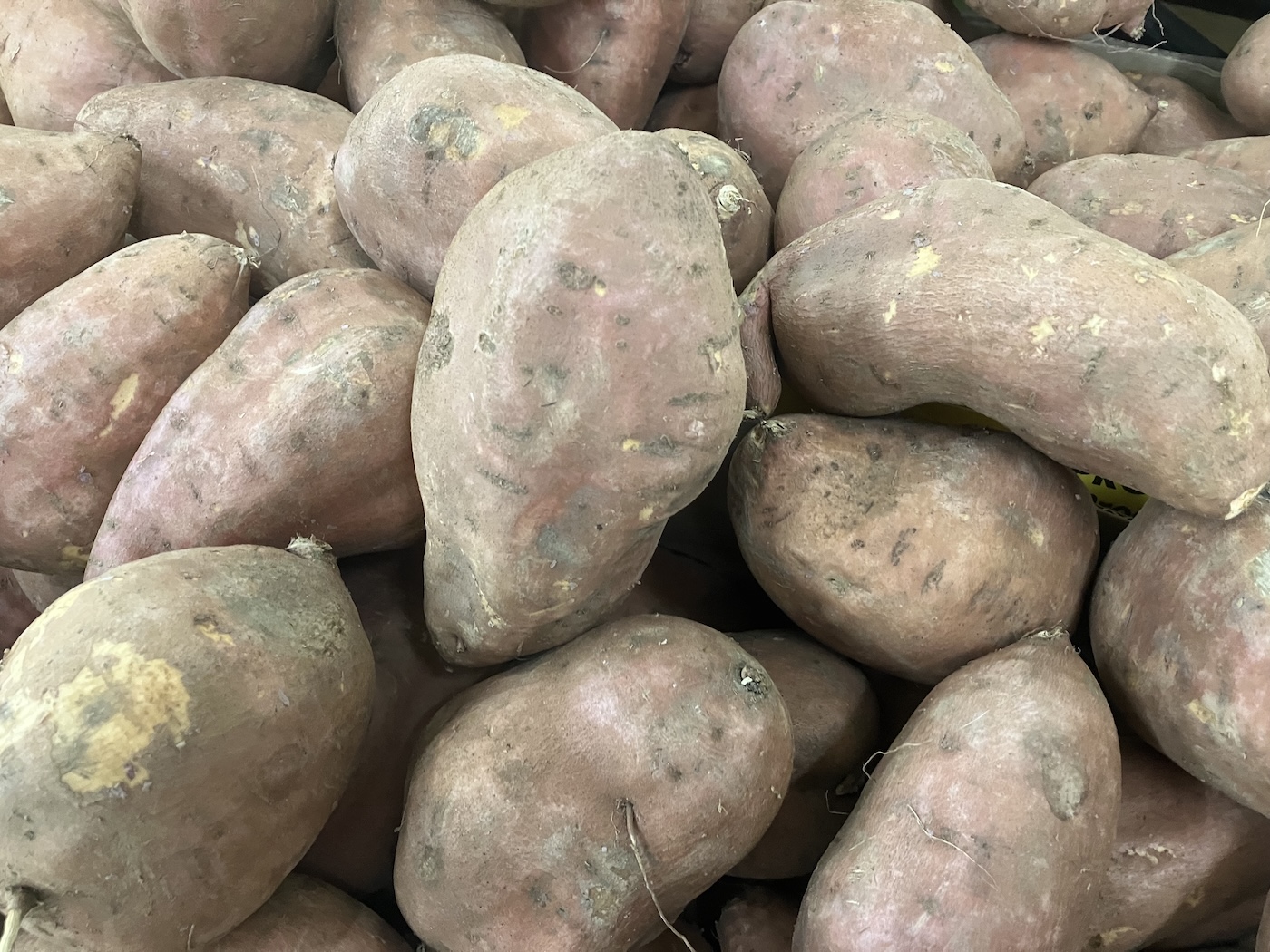
Sweet potatoes at Iverson’s Piggly Wiggly in Oconto Falls were waiting for customers to collect as part of preparing Thanksgiving dinner. This year, the cost of a 3-pound bag jumped up slightly to $4.05 statewide, but it remains below the national average of $4.20. (Lee Pulaski | NEW Media)


