
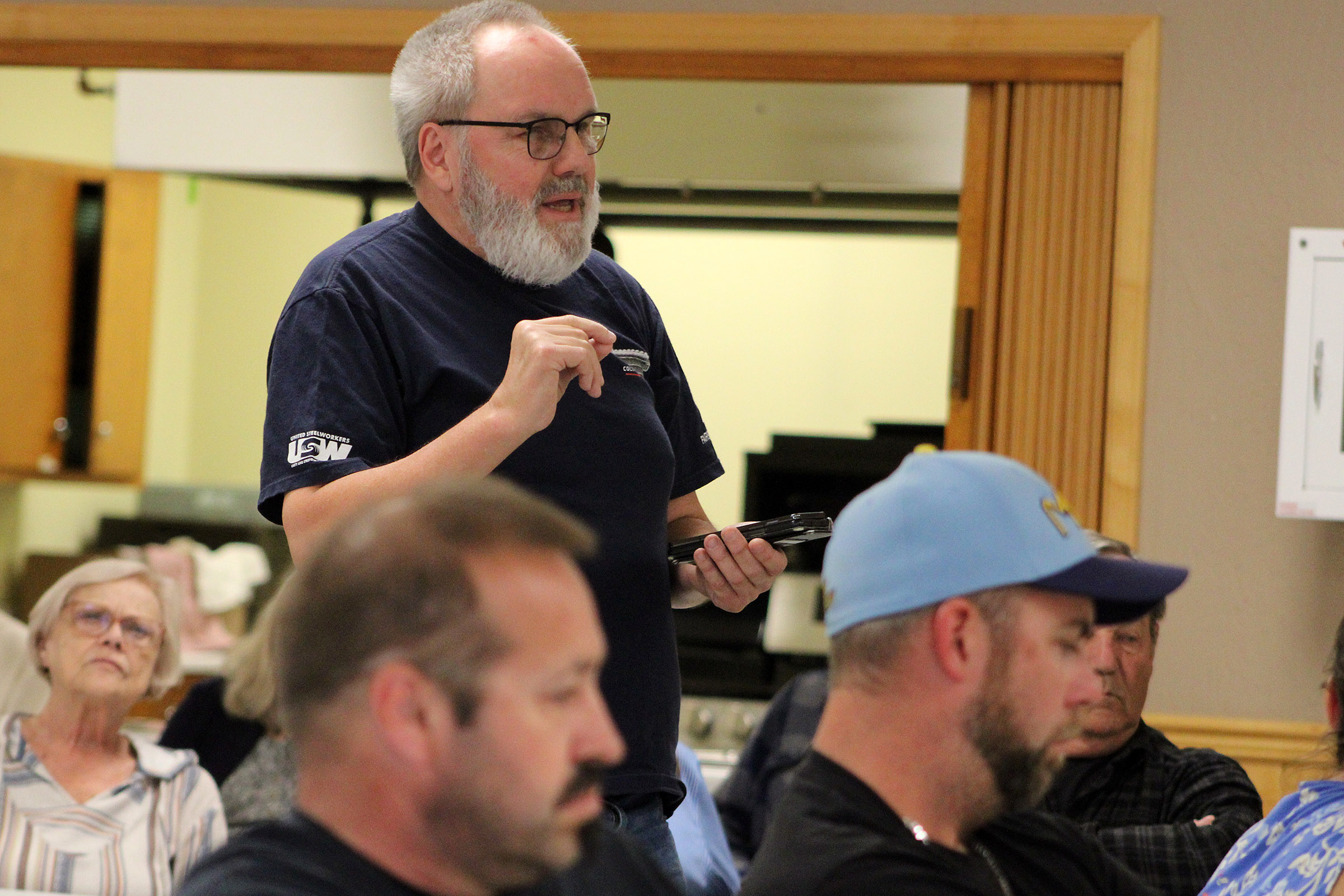
The Tigerton Village Board set a moratorium on data centers Sept. 15, giving officials time to learn about all the requirements such as infrastructure needs and how it would impact village resources if such a facility would be built within its borders.
The moratorium will be for one year or until the village is able to set up zoning policies specifically for data centers. The potential for data centers in rural areas like Tigerton has been popping up all around the state, with many fearing the loss of resources like water and wildlife.
There has already been at least one inquiry to the village about building a data center, according to Village Board Trustee Jeff Koepke. He said he and Board President Steve Reinert spoke with the developer, Blake Simpson, recently about what Simpson would need to do to establish a data center in Tigerton.
“He answered a lot of our questions,” Koepke said. “We talked to him about a moratorium, and he was not against it. He said it would probably be a good thing so we could get our ducks in a row.”
Koepke said Simpson was unable to be at the public hearing due to a missed flight, which left more than 70 residents in attendance with more questions than answers about the data center. He added both he and Reinert were impressed with Simpson and hoped to glean more details about the proposal in the future.
Reinert said the proposed data center would be smaller than what has been built in places like Port Washington but did not give specifics.
Reinert said Simpson wanted to work for the village and told him, “I want to do what’s best for Tigerton. There is a lot of stuff with these big ones that came in, and it’s different from the smaller ones we propose.”
“We don’t totally want to say no to anything,” Reinert said as he explained the need for the moratorium. “We also want to protect the village.”
Tigerton resident Domenic Dedolph said he was in favor of the moratorium, having chosen the village for his retirement but having a home in Janesville. He said he enjoys living across from the Dollar General and being able to relax in a lawn chair under his spruce tree.
“I’m listening to the crickets chirping and the frogs croaking, and when the sun went down the other night, I heard an owl hooting,” Dedolph said. “It just doesn’t get any better than that, and for me, that is my liberty, and that’s why I spend so much time in Tigerton.”
If a data center comes to Tigerton, Dedolph will easily be able to go to Janesville to escape any noise and disruption the center would bring, but he noted that his neighbors might not have such an option available to them.
“I can tell you this much. When the noise is too loud for me to sleep, I won’t be here,” Dedolph said.
Data centers that use 30 megawatts of energy to power their facilities use 60 times more energy than Tigerton residents currently utilize, according to Dedolph, and can power 24,000 homes.
“Believe me, when you produce that much power, it is loud,” he said. “You can mitigate it. It costs tens of millions of dollars to mitigate the sound, but if we’re going to move forward with this, I want to see a moratorium put into place. I would like to see some good zoning regulations for the noise, and if the developer wants to spend the money, he can mitigate the noise.”
Shawano County Supervisor Steve Natzke pointed out that the county board established a moratorium in June so the planning, development and zoning committee can do the same thing the village is trying to do — get more information. The county moratorium only affected towns in the county that were under county zoning and did not have their own municipal zoning. Tigerton has its own zoning regulations, which is why a village moratorium needed to be passed.
“They will also be visiting sites,” Natzke said of the county officials looking into data centers. “The moratorium can be only a year. It can’t go longer than a year. They said they would move forward slowly and try to get everything done before the moratorium is over.”
Natzke suggested the village try to piggyback off the county’s research to help move further along.
Several residents voiced concerns about municipalities that inked deals with data centers and had to sign nondisclosure agreements that prevented them from talking about the centers. Village Attorney Austin Mogard said there was a case going through the court system challenging the agreements as a violation of the Open Records Law.
“That’s a whole other barrel of monkeys of violations of open records,” Mogard said.
The village’s public hearing also including comments from people running for political office. Rick Crosson, a Democrat seeking to unseat U.S. Rep. Tony Wied, pointed out that Wrightstown held a referendum on data centers with 94% of voters saying no to the facilities. Crosson said the referendum was only advisory, but it sent a clear message; he recommended Tigerton put the matter to voters, as well.
“Taking the words of these data center folks, they are slick, and they will tell you what they think you want to hear,” Crosson said. “I would also encourage you to get as much neutral expertise in place to help you through the decision-making process so that you are making informed decisions.”
Gillian Battino, a Wausau resident who is running for the state senate in District 29, recommended the village also seek some help from the state. She recommended that villagers talk to area representatives and senators and make sure they know how their constituents feel about data centers.
“As a community, we need to be holding our state legislators’ feet to the fire and making sure they’re protecting our local control so that we can be making decisions,” Battino said.
lpulaski@newmedia-wi.com
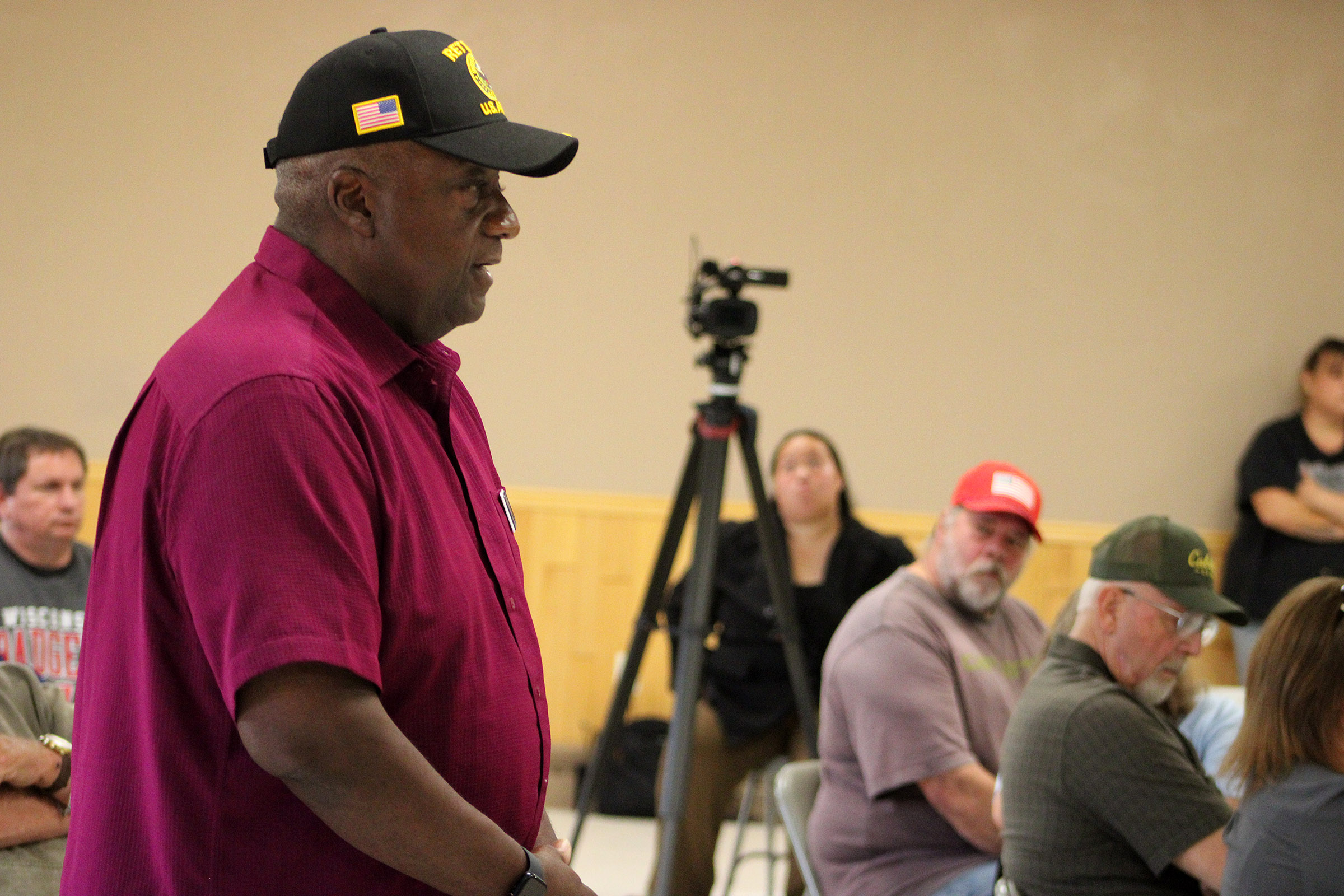
Rick Crosson, Democratic candidate for U.S. Congress, tells the Tigerton Village Board and village residents Sept. 15 that the decision on data centers should rest with the voters. (Lee Pulaski | NEW Media)
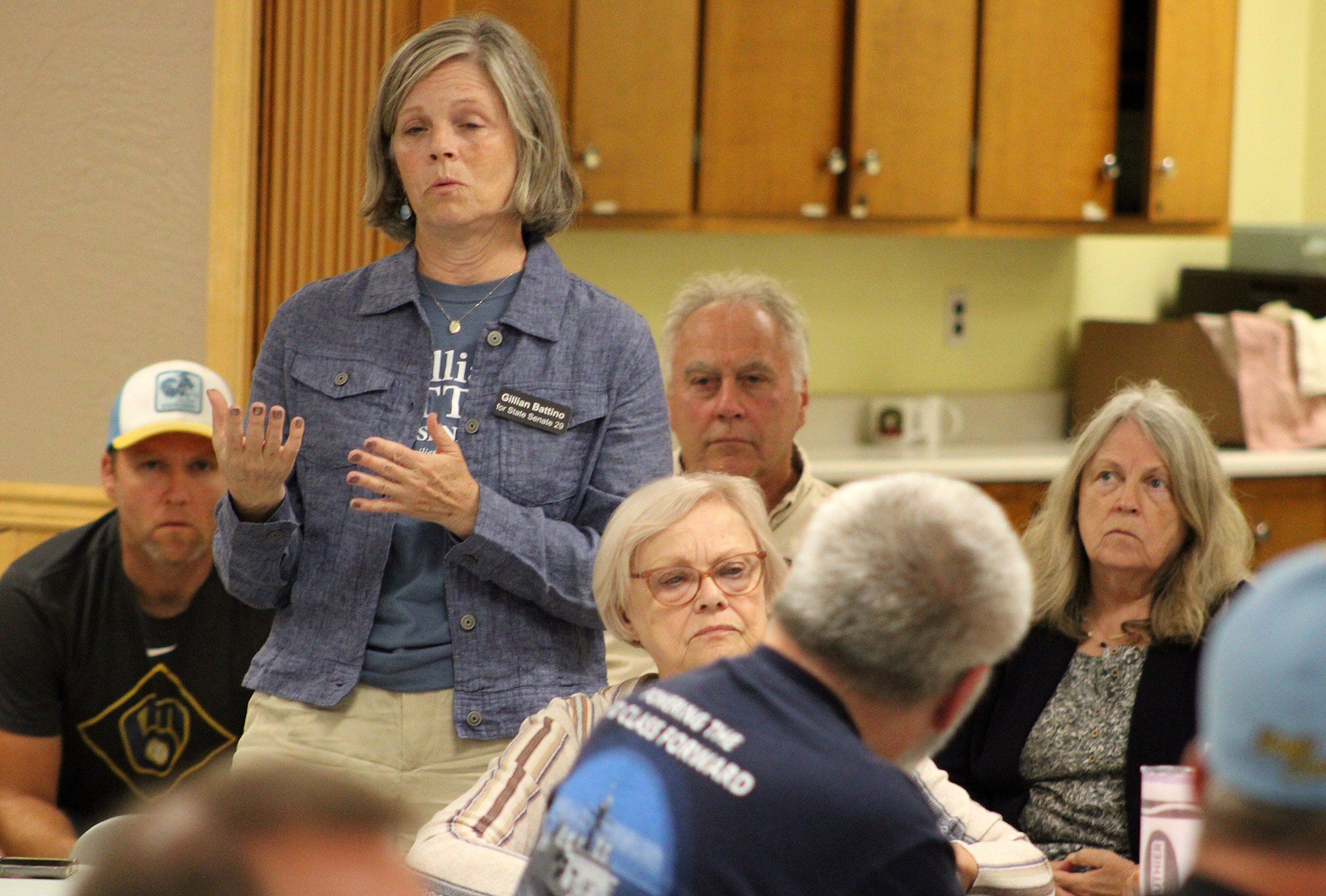
Gillian Battino, Democratic candidate for the Wisconsin Senate 29th District, tells Tigerton village residents Sept. 15 that they should be speaking with their legislators and urging them to take action on data centers. (Lee Pulaski | NEW Media)
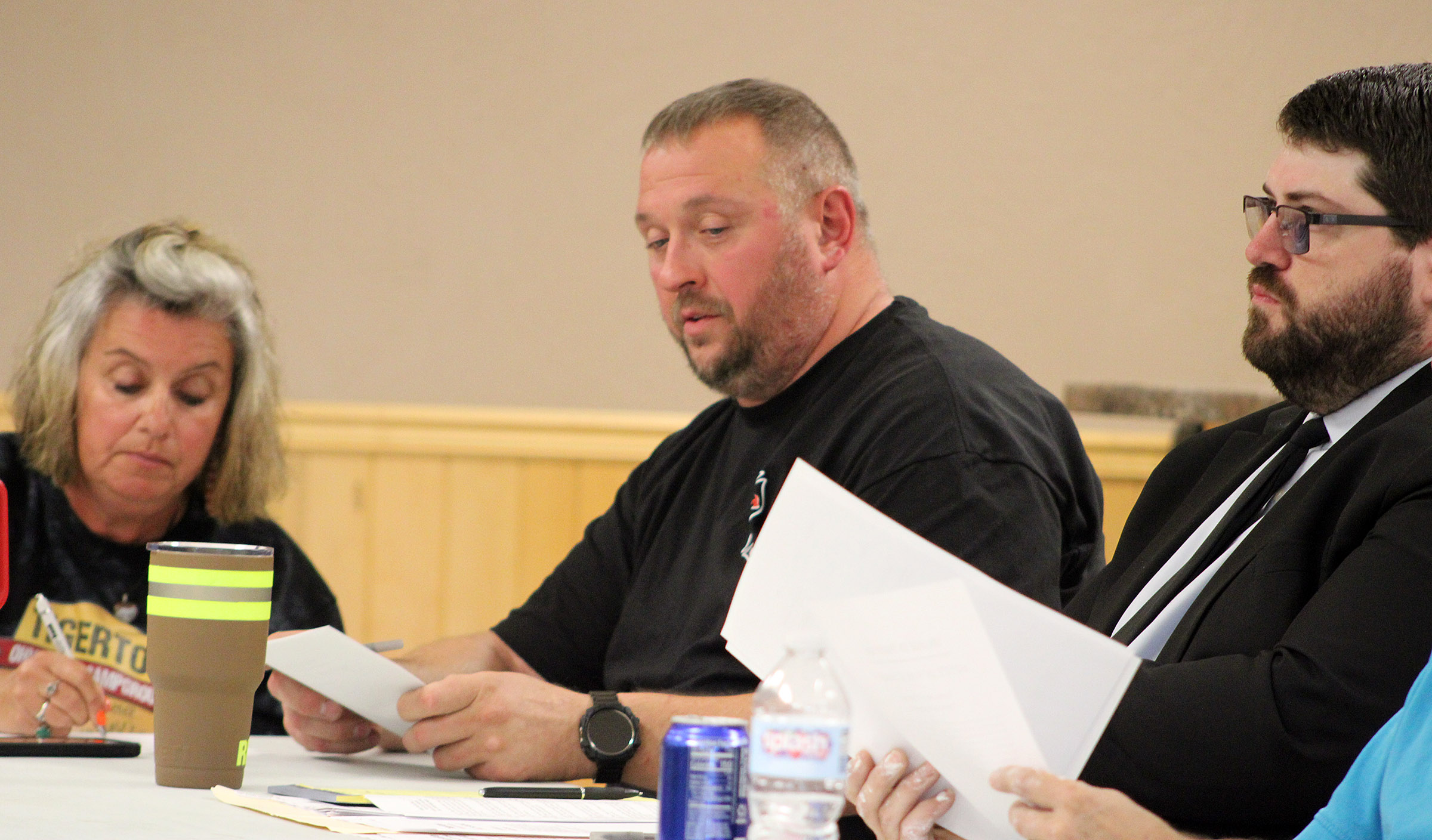
Tigerton Village Board President Steve Reinert, center, calls for a vote on the resolution putting a moratorium of one year on data centers as he’s flanked by Village Clerk Helen Selle and Village Attorney Austin Mogard. (Lee Pulaski | NEW Media)


