
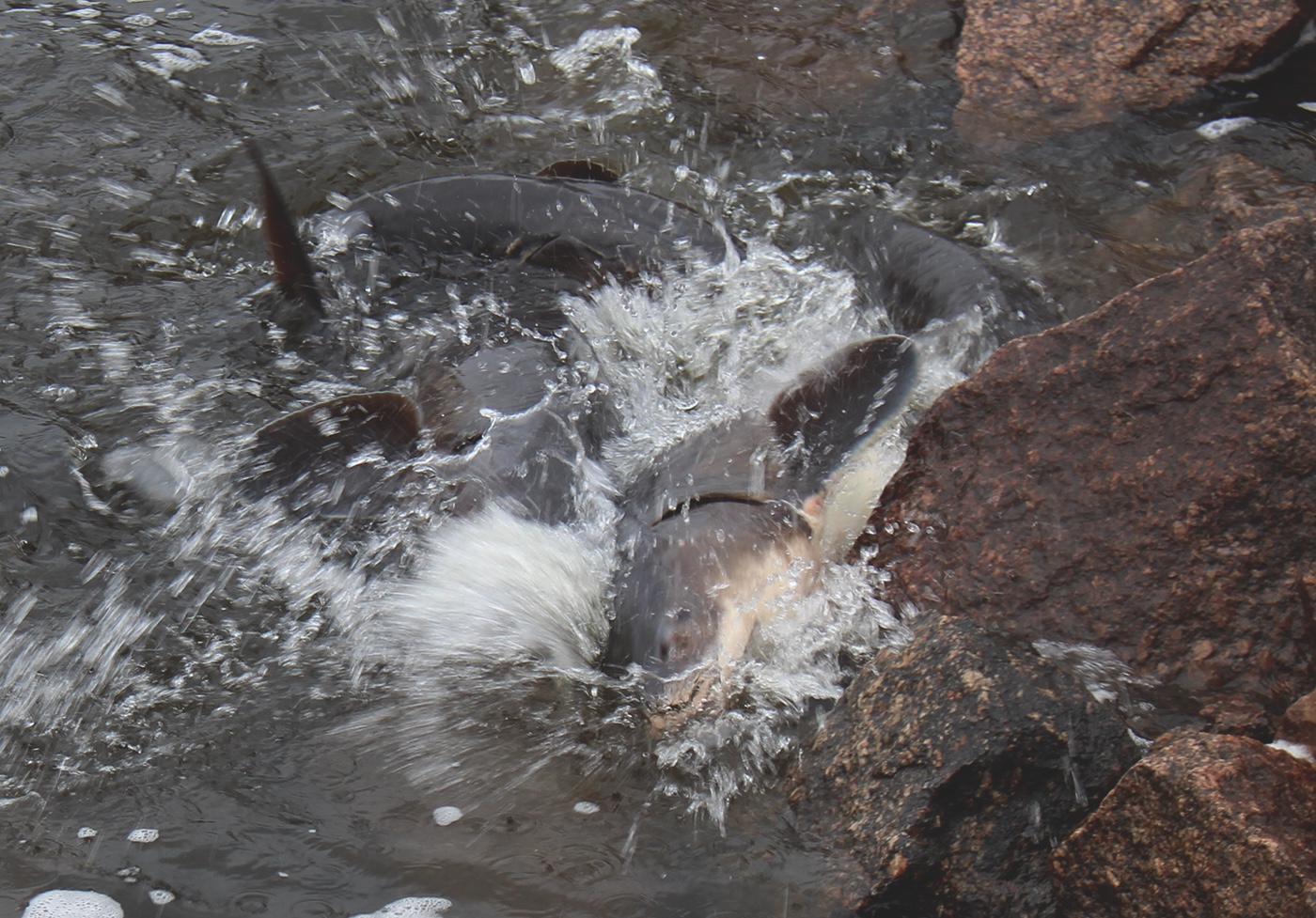
Historic flooding along the Wolf River in Shawano, Outagamie and Waupaca counties this spring has put a damper on opportunities to watch the annual ritual of Winnebago System lake sturgeon spawning in the river.
However, the high water is not expected to have a long-term effect on the fishery, and the fish are dealing with the situation, according to DNR sturgeon biologist Margaret Stadig.
While Stadig and her team would normally be capturing, tagging and releasing sturgeon in the Wolf River from New London to Shawano this time of year, the high water has sent them south along the Fox River in and around Princeton.
She expects sturgeon to congregate below the Shawano dam once water temperatures warm up. DNR crews visited the dam — the farthest point north the fish can travel — April 13.
“The Shawano area was really cold, like 46 degrees,” Stadig said. “Sturgeon need anywhere from 53-55 degrees to spawn. We’re still a ways off from spawning in Shawano. I’m still convinced we’ll get fish in the Wolf River at some point in time. I just need to wait for Mother Nature to tell me when.”
High water on area rivers and streams is not unusual in the spring.
“That’s when we always get rain, that’s when we always get snow,” Stadig said. “We’re used to seeing high water in these areas. Not only that, but it’s the water that tells the sturgeon that it’s time to go upstream. It’s this excessive amount of water that has kind of thrown all of us humans for a loop when it comes to what to do.
“The sturgeon have already figured it out. They’re already in New London, they’re already in Shiocton. They’re acting exactly the way I would expect them to.”
Several sturgeon have actually left the river and ended up in ditches and yards in the Clintonville and Shiocton areas.
“While this is an extreme case of flooding, a lot of times the river will come up and we’ll have culverts and pockets of streams where sturgeon will kind of nose around,” Stadig said. “Every year, I end up chasing sturgeon up a culvert they weren’t supposed to go up, but they found it anyway. This year, there seems to be an excessive amount of them.”
Stadig said the fish that can be seen splashing in yards and ditches aren’t actively spawning.
“From the videos I’ve seen, they’re not spawning,” she said. “They literally found their own personal private pool and they’re having the time of their lives. They’re kind of confused and figuring out where they’re trying to go, but the action I’ve been seeing isn’t actually spawning activity. It’s not the right habitat, they wouldn’t think about doing it and I don’t think there’s a female for them to spawn with anyway.”
Stadig’s crews have been capturing sturgeon on the Fox and she said she hopes to eventually head to the Wolf.
That won’t happen until the water recedes, however.
“We’re really hoping to and I think we’ll be able to,” Stadig said. “We’ve actually been focusing all of our efforts on the Fox River. Usually, we only get about one day of tagging on the Fox before the Wolf gets going. This year, we’ve been assessing different habitats in and around the Fox. Once the water levels come down, I can assess whether sturgeon have already spawned. If they have, it’s one of those things, but if they haven’t spawned, we’re back on. We’ll get tags on fish the best we can.”
The DNR is asking people to avoid stopping at the viewing sites — including the Shawano Dam — while water levels remain high.
“I know there are a lot of people saying, ‘Well, there’s water on the sidewalk and it’s not that fast,’” Stadig said. “That is a significant amount of water rushing down the Wolf River at this point. There’s probably a lot of debris coming down you’re not seeing. Even though the water might look calm enough, it’s not. The best thing to do right now is stay away. We will have other sturgeon spawning years if you happen to miss this one.”
Stadig isn’t sure if the flooding will have a major long-term effect on the Winnebago System sturgeon fishery, one of the largest of its kind in the world.
“This is Mother Nature’s way of keeping things in check,” she said. “It just got to be a little aggressive this year. Until I see sturgeon actually spawning in front lawns that will be totally dry very soon, I don’t know if we’re going to have a huge impact on the sturgeon population.”


