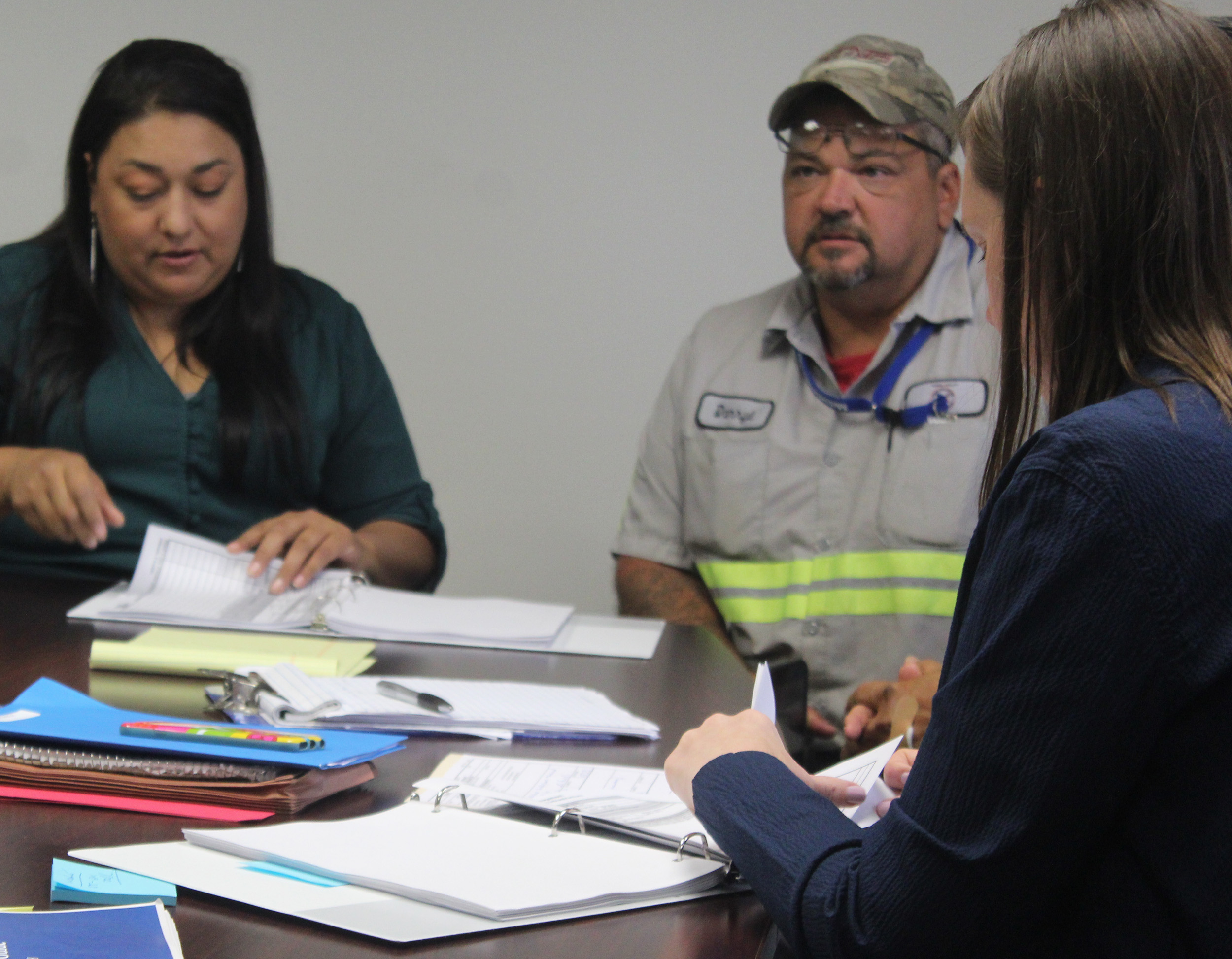
KESHENA — The Menominee Indian Tribe will ask Federal Emergency Management Agency for at least $59,000 in disaster recovery funds.
Representatives from FEMA were in northeast Wisconsin this week to conduct preliminary damage assessments for 17 different counties and several Native American tribes impacted by a severe storm in July.
Shawano and Menominee counties were among the affected areas FEMA planned to examine.
On July 19, a macroburst moved across Wisconsin with straight-line winds that brought down trees and power lines, blocking roads and causing damage to property. The Menominee Reservation was particularly hard hit, with officials reporting that power was out for almost five days for many homes and facilities.
The tribe presented a preliminary report Tuesday morning to FEMA officials at the Menominee Tribal Community Development Department. The tribe claimed about $59,000 in costs for generators, emergency supplies and manpower, among other things, but over the course of an hour-long meeting, it was discovered a few items were not included, so the fund request is likely to increase.
“This is the first time we’ve ever gone through something like this,” said Ben Warrington, the tribe’s emergency management director. “It’s definitely a learning experience.”
Warrington painted a bleak picture of how the reservation was damaged during the macroburst. He noted that volunteer firefighters for two different tribal fire departments worked throughout the night to remove trees and other debris from the roads and at facilities like the College of Menominee Nation.
With power out, the tribe had to open cooling centers in Keshena, Neopit, Middle Village and Zoar for up to 72 hours. The centers provided a cool place for people to rest and recharge their electronics like cellphones and laptops. Menominee Tribal Chairman Douglas Cox said many people even had to bring their food from their refrigerators and freezers to the centers to prevent spoilage.
“(Neopit) is one of our larger communities, so those that lost power in the community lost their freezers,” Cox said. “They brought the food out of the freezers to the school in the large walk-in freezers there so they could save their food resources. Otherwise, like everyone else, they would have lost all their food”
The big ticket item for the tribe was replacing a sewer pump in Neopit that failed. The tribe had requested $15,000 in compensation, but the total cost for replacement was $19,500.
It will likely take two to three weeks for a formal emergency declaration to occur, according to Troy Christensen, FEMA external affairs officer. For FEMA to provide funding, there has to be costs to the counties and tribes that exceed $8.5 million.
“The real goal this week is to get a really good idea from a statewide perspective what the overall impact of these severe storms and flooding really was,” Christensen said.
He added that FEMA planned to talk with Shawano County officials by phone at some point.
Christensen praised how well everything was organized, including copies of timecards for employees who worked on the roads, at the tribal clinic and at the cooling centers during the storms.
“The documentation (from the Menominee) was fantastic, which is not always the case (from other entities),” Christensen said. “We didn’t have to go to any sites for this particular assessment.”
Menominee give FEMA preliminary damage assessment