Fourteen years ago, my husband and I bought a cabin in the Wisconsin northwoods, and we have been enjoying it ever since. It offers us fishing, hiking, breathtaking sunsets and lots of new birds to learn about.
One group of birds caught my eye right away. While smaller than a robin, these birds were very territorial. They were quite entertaining as I watched them aggressively escort a bald eagle out of their domain. Come to find out, the appropriate name of this stately, proud bird is the eastern kingbird.
At that time, there were large groups of eastern kingbirds at every turn in the lake totaling close to 80 birds. But since then, their numbers have been declining every year; now, only about 15 birds reside there. Unfortunately, this story is not unique. Across Wisconsin and the entire United States, birds have declined 30% in the last 50 years. Even once common birds in Wisconsin are seeing declines.
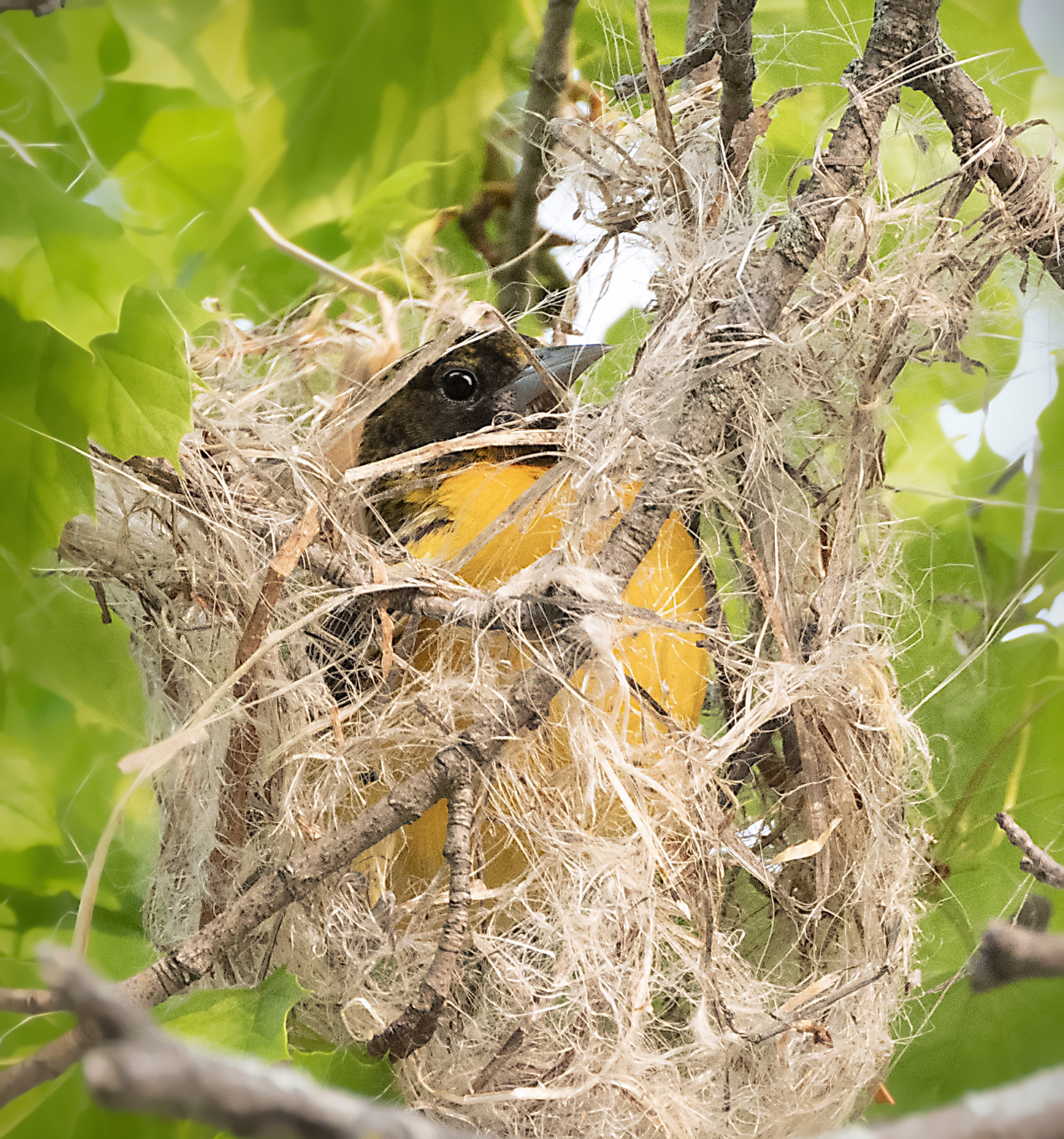
Another example is the Baltimore oriole, a favorite of both serious birders and backyard bird watchers alike. This spring, I watched a female oriole weave its pouch-like nest by using her beak to poke string through hundreds of thin, intertwined fibers and then pulling her head back to weave it out. I was in awe. I can’t imagine spring without this revered visitor with vibrant orange plumage and a rich flutelike song.
In Wisconsin, 68 species of birds are officially listed as endangered, threatened or have low or declining populations. To help reverse this loss, a campaign of the Wisconsin Bird Conservation Partnership, funded by the Natural Resources Foundation of Wisconsin, has started an action campaign called SOS — Save Our Songbirds.
The SOS campaign’s goal is to make it easier for people to make small changes at home to help birds. They encourage us to take one or more of these three actions:
• Add native plants to your yard: Nonnative plants can be toxic to native insects, thereby providing little food for birds. Native plants such as Spotted Jewelweed, Serviceberry and Prairie Blazing Star can be digested by native insects — in turn providing food for birds.
• Reduce window strikes: Studies have shown that up to 1 billion birds die annually after colliding with windows. Choose one window in your home that is prone to strikes and fix that one. A couple options include applying decals or decorations to the outside of windows and/or turning lights off at night during migration.
• Buy coffee that is grown in bird-friendly ways: Look for the Bird Friendly (BF) seal when you buy coffee. One example is Café Fair for sale at Festival Foods, Woodman’s Markets and Meijer.
You can find information on what plants to buy, easy fixes for window strikes and options to buy bird-friendly coffee on the SOS website at https://www.sossaveoursongbirds.org. There are so many times in life when I want to help but I just don’t know how. This SOS campaign not only tells us what we can do to help save our birds, but it also provides the information and resources on this website to help make it happen.
We should help birds not only because they are something pretty to look at and beautiful to listen to. According to the SOS, birds boost our mental health and anchor Wisconsin’s $2.6 billion wildlife watching economy. Birds disperse seeds, pollinate plants and help reduce crop and forest pests. Lastly, birds alert us to unhealthy conditions for people and wildlife. In summary, birds benefit our economy, our environment and our quality of life.
What would the world be like without our feathered friends? A morning without a white-breasted nuthatch skimming up and down the tree trunk and a house wren singing her sunrise song? An afternoon without hearing a hairy woodpecker drumming or never again watching a great blue heron stalk its prey? No more twilight with the enchanting “hoo-h’hoo-hoo-hoo” of the great horned owl and the lakes silent of the tremolo of a common loon?
What I do know is that I don’t want to live in that world. Let’s give one, or better yet all three, of these actions a try. A little effort on our part can make a big difference. Then the next time you see a bright red northern cardinal posing on a branch, a sweet black-capped chickadee gathering fruits and nuts or a silly American robin splashing in the bird bath, you can smile knowing you helped to keep them here, on this earth with us, where they belong.
Lisa Jansen is a conservationist, nature writer and award-winning photographer. She specializes in raising awareness of birds and butterflies of the Midwest.
Movement afoot to Save Our Songbirds